
Have a great time everybody! 😉
Have a great time everybody! 😉
So what were my range of products for the markets? I did not have much time to take photos and by the time I finished making and before packing, there wasn’t enough natural light to take good photos of all my products. However, I managed some.
The first product I introduce to you here is the most colourful one ‘Nerikiri‘. Nerikiri is the very delicate Sweet which basic ingredients are just rice flour, sugar and beans so that it is Gluten/Dairy/Oil/Egg free. It is one of the most classy Japanese Sweet ‘Wagashi (和菓子)’ that are often used for Tea Ceremony.
These are the three types I made.

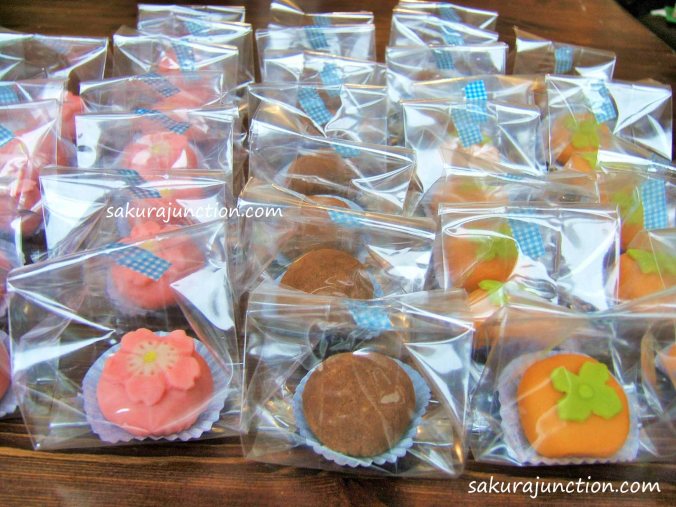
‘Nerikiri’ ready to go to Market
It’s over! My mission to running a stall in the Chritmas market in two weekends in a row finished! Pheeeeeeeew.
Although I was planning and practicing some sweets as products, not everything went according to plan. What I have learnt from this experience was that “Food is a living thing”. Even when I thought I was following the recipe I had a great result before, something went wrong when I really seriously wanted to make everything neat and delicious. It was so unpredictable.
There is a recipe of ‘Yaki-Mnju (焼きまんじゅう) / Baked Manju’ I normally use. That is a Japanese Sweet wrapped with biscuit. It is good. I like it. It is also something that Western people are quite familiar with.
We have a Japanese sweet called ‘Kuri-Manju (栗まんじゅう)’. That is a ‘Yaki-Manju’ with Chestnut ‘Kuri‘ pieces inside and made into a Chestnut shape. The skin of this sweet is slightly different from Western biscuit. It is much smoother and you can make it into some shapes.
This time I made ‘Yaki-Manju’ in the traditional way. I tried making some shapes with different filling.
This one is ‘Kuri-Manju‘ with Chestnuts ‘Kuri’.
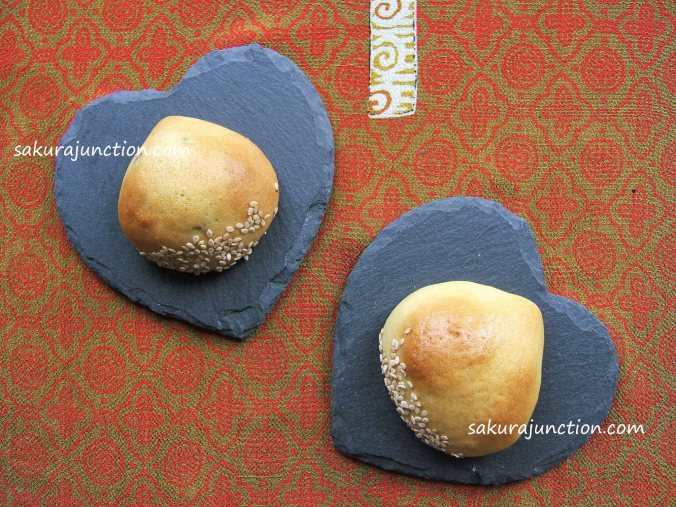
Does it look like Chestnut to you?

Instead of using small pieces, I mixed Chestnut in syrup mixing with ‘Shiro-An (白あん)’ and that made the filling looks like a paste.
 Sakura Junction