Shobu (菖蒲) / Iris

Shobu front

Koinobori‘ on my previous post is the traditional decoration on the ‘Kodomo-no-Hi‘ (Children’s Day/Boy’s Day) on the 5th of May in Japan. Another tradition on the day is that we decorate out house with ‘Shobu (Iris)’. So what is the reason behind this custom?

‘Shobu (菖蒲)’ on ‘Kodomo-no-Hi’

1280px-140614_Yagyu_Iris_Garden_Nara_Japan02bs5

Hana-shobu (ja.wikipedia.org)

First of all there are two types of ‘Shobu‘. One of them is ‘Hana-Shobu‘. It is Iris which we enjoy the magnificent flower with a striking colour and shape. The other one is medicinal ‘Shobu’ with very scented leaves but with insignificant flowers. They are totally different plants.

It seems like that people started using Shobu for this ceremonial occasion because …

Continue reading

Kodomo-no-Hi / Koinobori

Koinobori

‘Koinobori’ sweet

Time passes fast. Very fast indeed! It’s already May. This week people in Japan are having the longest National Holiday break in a year called the Golden Week. One of the Bank Holidays during the Golden Week is the 5th of May, ‘Kodomo-no-Hi‘. It is a day to celebrate the growth & health of children, but it is more like the Boy’s Day. We have the Girl’s Day on the 3rd of March as I posted before.

‘Kodomo-no-Hi’

There are several things people do on the Kodomo-no-Hi. The most famous thing is that we place fish shaped flags outside called ‘Koinobori‘ (‘Koi’ means carp and ‘Nobori’ is a kind of Flag). We have a song about it for children.

🎶 Yane yori takai Koinobori 🎶

It means “Koinobori swimming higher than the roof …”

%E3%81%93%E3%81%84%E3%81%AE%E3%81%BB%E3%82%99%E3%82%8A

Koinobori swimming high in the blue sky

Yes, it is placed traditionally higher than a roof, and some of them are bigger than a house. However, because many people live in a small apartment these days the size of Koinobori became much smaller in the last 50 years. From a week or two earlier towards the 5th of May you can see Koinobori swimming in the blue sky. It is a magnificent sight with a bit of wind, as they look like swimming in the sky. (However, I just saw somebody’s comment on social media that there is no Koinobori seen around where he lives…)

Continue reading

🍶Sake Tasting Seminar

Sake seminar

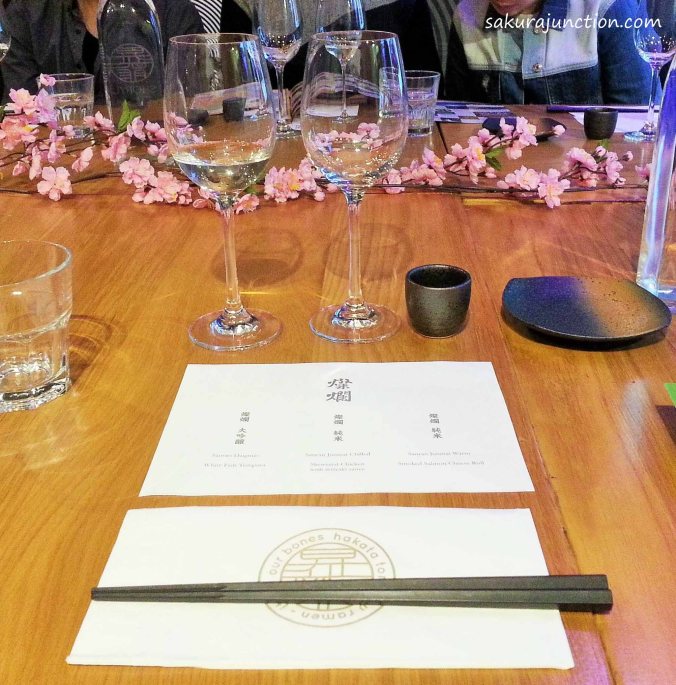
In the evening of ‘Hinamatsuri‘ (Girls’ Day, the 3rd of March) I attended the Sake Tasting seminar which was organised by Japan Centre. The venue was the popular Ramen restaurant Shoryu near Piccadilly Circus in London. Although it was early evening on Thursday the Ramen shop was packed with Ramen lovers. As soon as we arrived in a private Dining Room downstairs we were welcomed with a glass of chilled sake 🍶. Lovely 💓

Seminare scene 2

Continue reading

Hishi-Mochi Ukishima on Hinamatsuri

Usa hina

My little Rabbit Hina-ningyou

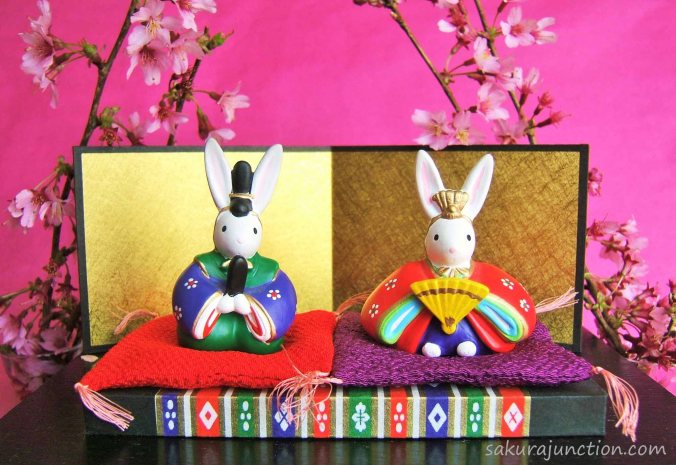
The 3rd of March is Girls’ Day in Japan. It is called ‘Hina Matsuri‘ or ‘Momo no Sekku‘ and we celebrate girls’ health and growth (Don’t worry we have Boys’ Day as well). This day we decorate ‘Hina Ningyou‘, the dolls of a princess and a prince or even with lots of their servants and music players on red carpeted shelved space, with Plum blossoms in a room.

My Hina Ningyou are Rabbits. I brought them when I came to England. They are very small and cute.

There is certain food we eat on the day that is all pretty and beautiful for girls of course. Main meal is definitely ‘Chirashi-zushi‘ which is Sushi rice served with colourful fish, vegetable and egg on top. We also have a clear soup with ‘Hamaguri‘ Big Clam.

One of the typical sweets for this day is ‘Hishi-mochi‘ which is Rice cake in a diamond shape in tricolours of pink, white and green). ‘Hina arare‘ (pastel coloured Rice crackers) and lots of sweets in flower shape & colours are often had as well. The girls have a drink called ‘Amazake‘ which is sweet Sake. Yes, it is a kind of Sake. Although there is alcoholic Amazake but normally we have sweet sake without alcohol, so young girls can have it on this Hinamatsuri.

I have been thinking what I should make for this day and wanted to try something new for me. And then one idea stuck in my mind so … here it is.

Hishi-Mochi Ukishima 

Hishi-mochi ukishima SJ Continue reading

Mochi / Shiratama Dango (白玉だんご)

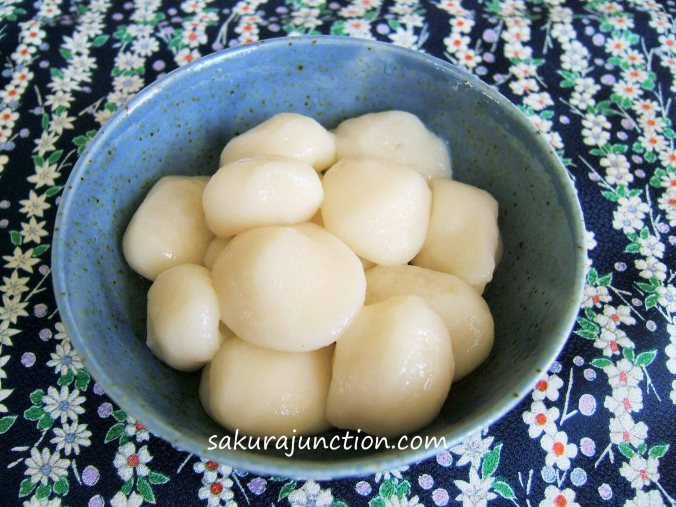
You might know one of the famous very Japanese food ‘Mochi (Rice Cake)‘. We traditionally eat it during New Year’s days (we celebrate for 3 days). ‘Mochi’ is made from sweet glutinous Rice by soaking, steaming & pounding it.

Mochitsuki

Traditional ‘Mochi-Tsuki’ (Rice cake pounding)

It has become very rare to see the traditional ‘Mochi-tsuki‘ (Rice cake pounding) these days. It’s only seen in some kind of festival. Instead we have an electric Mochi maker for home use and people can make Mochi easily, however, it is still fiddly to go through the process for making small amount of sweets at home.

But there is another type of ‘Mochi’. It’s so much easier to make particularly for a very small amount. It is ‘Shiratama- Dango’.

<Mochi / Shiratama Dango> 

Shiratama

Continue reading

Shiratama Zenzai

Very strong wind was blowing around this week. It was a gale caused by the Storm Imogen on East coast of Britain. We started having extremely mild winter and then suddenly it became wintery winter! Cold and miserable.

On a cold day like today I feel like having something warm and comforting. There is only one thing in my mind. It must be definitely …

Shiratama zenzai 3

‘Zenzai’ with Mango & Matcha ‘Shiratama’

Continue reading

Setsubun

Oni to Sushi

Red ‘Oni’ with two horns

In Japan we have several special days in a year. The 3rd of February is one of them, It is a day called ‘Setsubun‘.

What is ‘Setsubun’?

Setsubun is written as ‘節分‘ in Japanese which means ‘divide (分)’ ‘season (節)’. The day actually is one day before the changing of season. It seems like we used to have four Setsubun before each season in the past but since Edo era (a few hundred years ago) we particularly cerebrate only the beginning of Spring. So the 3rd of February became our ‘Setsubun’ and we celebrate the coming of Spring on this day.

ehoumaki to mame

Continue reading

Rosy Sake Jelly with Raspberry Sauce

Rosy Sake Jelly with Raspberry Sauce 1

Rosy Sake Jelly with Raspberry Sauce

This is the sweet dish I made for the Sake Cooking competition. The theme of my dishes for the competition was ‘Sake for Eating’. This dessert was a food but I wanted to put some reminder that Sake is alcoholic ‘Drink’. That is why I wanted to use a wine glass for serving this dessert.

My thoughts behind this dish were

1. I wanted to keep all the flavour and taste of Sake in my dessert without losing any by heating Sake. That is the reason I decided to make Jelly.

2. I like flavour of Sake, however, I wanted something ‘more than just Sake’. I infused Sake with Rose Petals in order to enhance the delicate Sake flavour. The consequence of that made the Jelly has fragrant Rose smell and also slightly Rosy pink colour. I managed to infuse Sake in both flavour and colour.

3. It has been changing in recent years but Sake still has the image as it is the drink for men more than for women. I wanted to create something which suggests that Sake could be something romantic.

Rosy Sake Jelly with Raspberry Sauce

Rosy Sake Jelly with Raspberry Sauce 2

Continue reading

And the Prize Goes to …

Wow … what a day, what an experience.

It was three months ago, I saw this advertisement about Sake Recipe Competition.

CWB6EsCVAAEIZzW.png large

‘Gekkeikan Masters Cooking Competition’

The notice must have been out there for a while but when I saw this poster it was just a week before the deadline. The applicant had to create two recipes, one in savoury and one in sweet by using Gekkeikan ‘Sake‘ (Japanese Rice Wine) which should not be a Japanese Dish. Developing two recipes in a week seemed rather hard but I tried anyway. Then right after New Year’s Day I received an email saying that I was shortlisted for the final! They said that six finalists were selected from over one hundred applicants. That sounded pretty impressive.  😀

However, I faced the first problem … The contestants had to cook the dishes in the final day and serve them to judges. I submitted a baked dish but there was no oven at the venue! I had to develop some other dishes which you didn’t need to use an oven. I had tried several dishes but was not happy with them. And then one week before the final day I was told that I could bring a small oven if I wanted. Great! So I decided to stick to my original idea but had to adjust the recipe a little for making it suitable for cooking in a small oven.

The final stage of the competition took place at Ichiryu Udon noodle restaurant last Sunday (the 24th January). But there was a bigger problem waiting ahead of me…

Continue reading

How to make ‘Shiro-An (白あん)’ (Quicker version)

Shiroan White Bean Paste

By going through the preparation for markets and recent private order I had a chance to make ‘Shiro-An’ so I can finally post ‘How to Make’ it here.

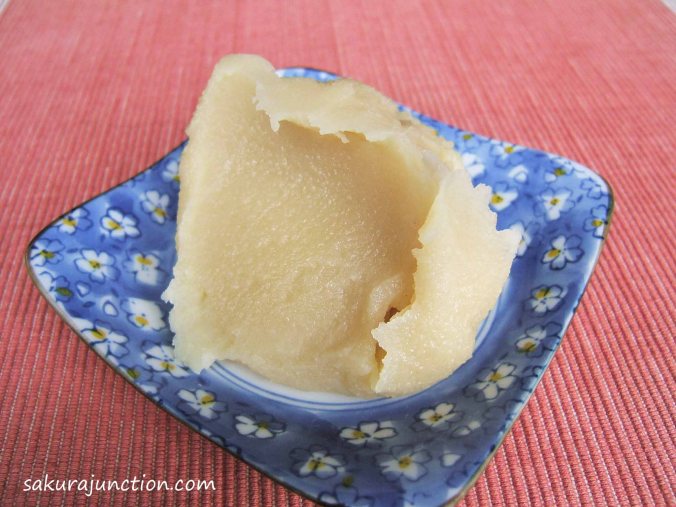
‘Shiro-An’ is one of the main ‘An/Anko‘ Sweet Bean Pastes for Japanese Sweets which is made from white beans such as Butter Beans or White Kidney Beans. I used to think that it is just one type of Anko but since I started making wider range of Japanese Sweets I now realised that ‘Shiro-An’ is definitely the most important one among of all ‘Anko’ Sweet Bean Pastes.

Shiro-An is not just a tasty filling but it is also an essential ingredient for making Japanese sweet. Because it is 1. in white colour so that you can change it into any colour you want 2. having a very smooth texture, it is very versatile and basically it acts like a great shape shifter. It can be used in all sorts of sweets in disguise. My recent hit sweet ‘Ukishima’ and also ‘Nerikiri’ are just two examples that ‘Shiro-An’ is used into a different shape. Unless you are told you don’t realise.

So How do you make ‘Shiro-An (白あん)’/ White Bean Paste? Well, professionally it is a long process but I am going to show you the easier method. Some steps are omitted here but the product you get tastes very good. What you need is just patience and lot of care.

Continue reading