The Memory of Summer Holiday – Goldfish

When schools break up for summer holiday, it is the signal that lots of local festivals are ready to start all around in Japan. Many stalls appear in a square that sell food or goods to the people visiting. There are some stalls for offering games too and ‘Kingyo-sukui’ is the one of them. ‘Kingyo’ means Goldfish and ‘Sukui’ is a noun form of a verb to-scoop in Japanese. So what does ‘Scooping-Goldfish’ mean?
275px-_____

Children enjoying ‘Kingyo-sukui’

On the Kingyo-sukui stall they bring a pond with many small Goldfish. The customers pay to get a small ladle which is made of paper and can keep scooping goldfish until the paper tears up and it is no longer possible to scoop up any fish. That is the time that game is over! At the end of the game you can take the goldfish home you scooped. I have to say I was very good at Kingyo-sukui when I was a child. I could get about 20 goldfish easily with just a one paper ladle.

So when I see Goldfish it reminds me of the Summer holiday. It is very nostalgic and that is why I chose Goldfish as the design for the sweet for August.

Goldfish

Although the fish is called Goldfish, the main colour of them is Red, bright red so the Goldfish on my sweet is also Red.

Goldfish 6

Continue reading

Mango Mochi

I want to know whether we are still in the summer in London. It’s neither hot or warm any more. It is actually quite cool. It is the first day in August today but I already feel like that summer has gone. Autumn must be coming soon or we are already in Autumn. I know usually Indian summer comes around September but still it is too cold for mid summer.

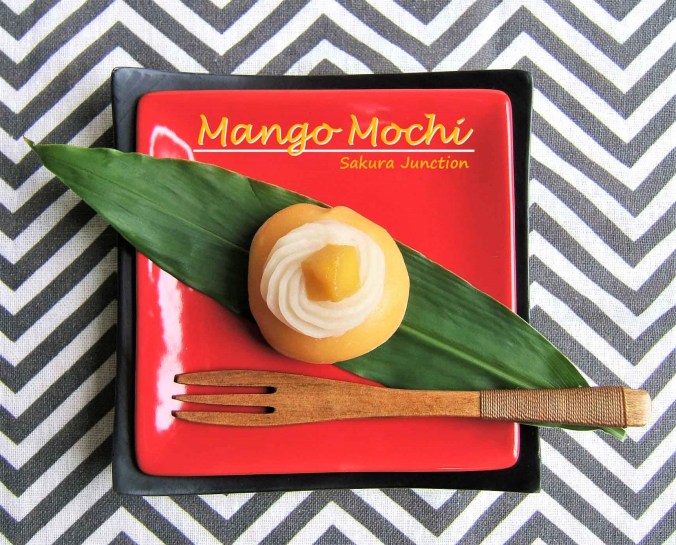
In order to get rid of this cold rainy feeling I had to make something very summery sweet. In my mind ‘Summer = tropical = fruit = … Mango!’ That is why I chose Mango as the flavour for my Mochi for August.

Mango Mochi

Mango Mochi 1

Continue reading

‘Strawberries and Cream’ Cup

Oh, it’s nice to have a little rain today. I know it is not as hot or humid as how Japan is at the moment, but it has been very hot here in London. It is also in the height of Wimbledon Season here and the British People’s minds are also heating up in cheering British male No.1 player Andy Murray and the female player Johanna Konta. Both of them just got through to the quarter-final yesterday. Hooray!

Anyway, where there is an event, there is also a famous food or drink, isn’t there? For instance if the event is RHS Flower show, it is a Pimms and if the event is Wimbledon, it is certainly ‘Strawberries and Cream’. It sounds so stylish but it is actually just some fresh strawberries serving with cream on top, but people love to have it in the court side or ‘Henman’s Hill’ whilst cheering for their favourite players.

So, as an homage to this Wimbledon season I wanted to arrange this traditional British dessert into some Japanese sweet, but how …. ?

Strawberries and Cream Cup

This is the outcome of all my thinking about ‘Strawberries and Cream’. It is made of a traditional Japanese Sweet called ‘Nerikiri’ and I shaped it into a very western looking sweet. I placed three small strawberries and some cream in a cup which is also made of Nerikiri pastry and of course you can eat the whole thing including this cup.

Strawberries & Cream1

Continue reading

Mochi Hydrangea

It is ‘Tsuyu’ Rainy season again, I mean in Japan. Instead, we are having a heat wave here in London right now. Actually it is the longest heat wave in June for 20 years. But back to talking about the rainy season in Japan. We get an announcement when the rainy season starts in each region, however, it is quite common that it stops raining after the declaration. This year seems to be the example of that year because I just checked today’s weather in Japan and saw ☀ for almost all the area.

Anyway, however the weather is, it is June and it is the begining of the rainy season and the symbol of the season is ‘Ajisai’ Hydrangea flower.

Mochi Hydrangea

Last year I designed a Japanese sweet Hydrandea by getting  inspiration from the flower of June. It was a ‘Nerikiri’ type of sweet. However, because ‘Mochi’ is very popular in London, I have been trying to think how I could make this flower in a Mochi type of sweet. I came up with an idea and here is the result.

Ajisai 5 Continue reading

The Wagashi Day

Do you know today, the 16th of June, is “the Wagashi Day”? ‘Wagashi’ means Japanese Sweet in general but how is this day connected with Japanese Sweet and what do people do this day?

The Wagashi Day and Sixteen Sweets

It started in the year of 848 in the Heian period when plague was spreading throughout Japan. With the hope that this disease would stop and everybody would live healthily and happily, the Emperor Ninmyō changed the era to Kashō and prayed to the God with an offering of sixteen Japanese sweets. It was on the 16th of June and the number of the sweet offering was associated with the date. Since then this day became the Wagashi Day and people ate Japanese sweets and wished a happy life. This custom carried on until the Edo period.

Sadly the custom diminished sometime later, but in 1979 Japan Wagashi Association reintroduced the Wagashi Day back into society by wishing that people would continue appreciating the magnificent Japanese sweet and carry on the beautiful food culture for future generations.

Although I have liked eating Japanese Sweet Wagashi since my childhood, it is not that long ago that I started making it myself. Since then I realised that Wagashi is such a versatile sweet which is made from very limited ingredients of just beans, rice powder and sugar basically. By wishing this world becomes a safe and wonderful place to everybody I re-introduce 16 sweets of mine that I made last year 2016.

Enjoy your Wagashi Day!  😀

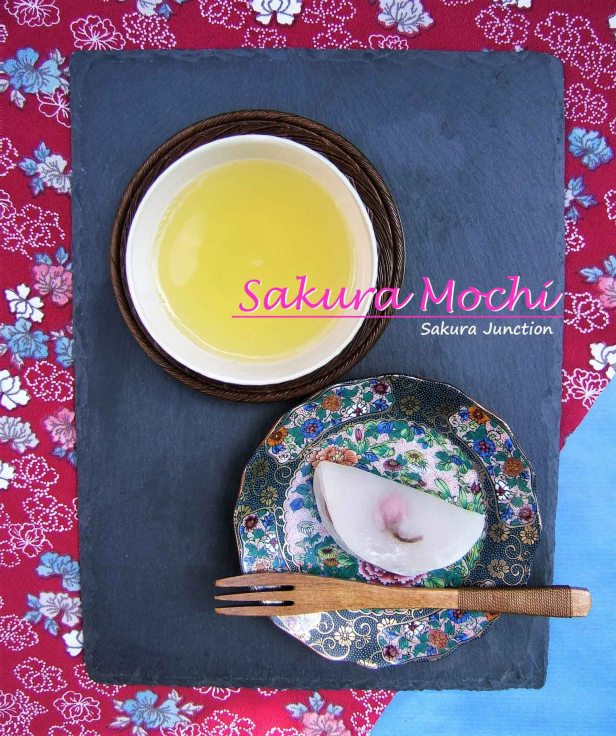
Sakura Mochi

In my garden, Lilac flowers have gone and the marvellous scent of Mock Orange (Philadelphus) flowers is filling up the atmosphere instead now. I know Sakura, Cherry blossom, season is over and I have to admit that I made this sweet a few weeks ago but did not have a chance to post here.

Sakura Mochi

It is a ‘Mochi’ type sweet with a hint or two of Sakura Cherry Blossom essence.

Sakura Mochi

So what is the Sakura essence that I added to this sweet?

Continue reading

Apple & Rhubarb Coconut Crumble Cake (Dairy Free)

What would you make when you have only one stick of rhubarb in your refrigerator? Most of the time I cook rhubarb with some apples and dried fruits and make some compote to go with vanilla ice cream or plain yogurt, but one stick of rhubarb? Surely it is too small quantity to make a dessert. Rhubarb contains lots of moisture and that is why it is suitable to use for making compote. I thought it would be great if I could use the juice from it to moisten a cake.

In my mind rhubarb is also strongly connected with crumble, so I got the image that juicy rhubarb compote on top of a well baked cake with a cluster of crumble on the top too … So basically I decided making a cake with compote and crumble, with everything combined together 🎂

Apple & Rhubarb Coconut Crumble Cake

Apple & Rhubarb Crumble Cake4

Continue reading

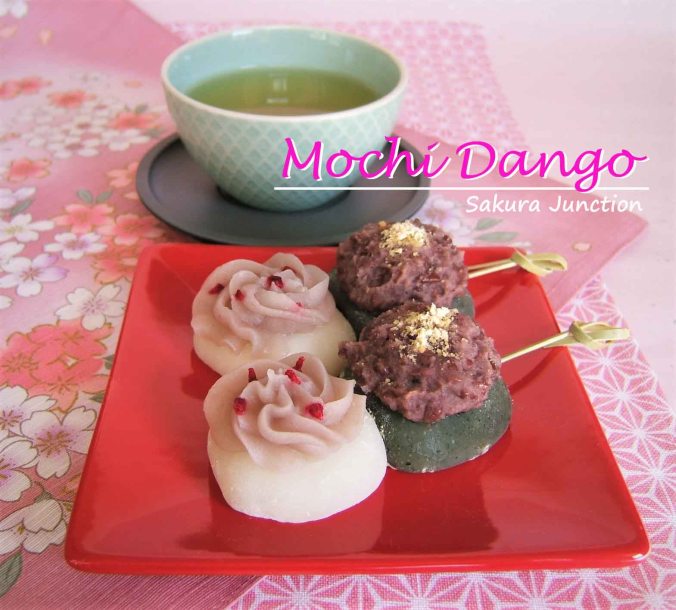
Mochi Dango

As a part of the story of ‘Hanami’ (Cherry Blossom viewing) I have introduced a sweet called ‘Hanami-Dango’ in April. It is a tri-coloured Mochi on a skewer which is a traditional and popular sweet in Japan. Yes, it is a tradition that Hanami-Dango is composed of three balls in green, white and pink colours. I also explained why it has to be in those colours and why in that order. However, It is my nature to try arranging things to create something different and Dango is no exception so I made un-traditional Dango.

Mochi Dango

This is Mochi Dango with two types of Mochi and toppings.

Mochi Dango

Continue reading

Afternoon Tea in Canary Wharf

Last year I made a debut to a very British customs ‘Afternoon Tea’. The concept of it is similar to Cream Tea that I occasionally have, however, they are a little different. Basically Afternoon Tea is a mixture of lunch and tea time together which serves tea with some sandwiches and dessert. By knowing it is a traditional custom for upper class people, it is a little intimidating experience but it is becoming more popular among wider range of people these days.

I had another opportunity to try this high end custom (at a reasonable price) the other day. It was a farewell occasion with somebody who helped me out and is leaving the UK soon.

Afternoon Tea

To be honest it is quite difficult to choose the venue. Of course if you want to spend lots of money for the best experience there is no problem. The top quality afternoon tea costs over £100 per head. However, if you want to find a venue for a great experience but reasonably priced, you have to do a lot of research.

Afternoon Tea 13I finally booked a table in a hotel, but I was worried if it was not as good as I hoped it would be. However, once we arrived at the hotel I got a good feeling. Although the restaurant is located on the ground floor, we were led to the Executive Lounge which is on their 14th floor. There were some other people having tea already but tables were placed with some distance so our conversation was not disturbed at all.

We settled at the table and not waiting that long, our tea arrived, followed by a three tiered cake stand.

Afternoon Tea

Continue reading