Teru Teru ‘Mochi’ Bōzu

It has been quite good weather for a while in London. It sometimes rains during the evening and is sunny in the daytime. This is perfect for the plants. In the meantime the rainy season continues in Japan and although it is not the typical season even Typhoon is approaching now. I have seen so many photos of beautiful Hydrangea from Japan which is in full bloom in bright pink and blue in the rain. Yes, the rain is good for plants, definitely. However, sometimes it rains just too much even for Japanese so that people, particularly children, wish it would stop and become sunny the following day …

TeruTeru editYou might not know but there is such a traditional magic to stop the rain in Japan. It is a charm and you don’t need a magic wand. You don’t need a magical powder. Instead, what you need is a simple mascot! The mascot is called ‘Teru Teru Bōzu’ and you can easily create one by yourself. I assume you are motivated to try making this Japanese traditional Please-Stop-The-Rain-Tomorrow-Mascot. I add “How to make Teru Teru Bōzu” at the end of this post so that you can make one.  🙂

Teru Teru ‘Mochi’ Bōzu

Teru Teru Bōzu is the symbol of this rainy season. Why not have it as a sweet?

Teru to edit cut

Continue reading

Mochi Hydrangea

It is ‘Tsuyu’ Rainy season again, I mean in Japan. Instead, we are having a heat wave here in London right now. Actually it is the longest heat wave in June for 20 years. But back to talking about the rainy season in Japan. We get an announcement when the rainy season starts in each region, however, it is quite common that it stops raining after the declaration. This year seems to be the example of that year because I just checked today’s weather in Japan and saw ☀ for almost all the area.

Anyway, however the weather is, it is June and it is the begining of the rainy season and the symbol of the season is ‘Ajisai’ Hydrangea flower.

Mochi Hydrangea

Last year I designed a Japanese sweet Hydrandea by getting  inspiration from the flower of June. It was a ‘Nerikiri’ type of sweet. However, because ‘Mochi’ is very popular in London, I have been trying to think how I could make this flower in a Mochi type of sweet. I came up with an idea and here is the result.

Ajisai 5 Continue reading

The Wagashi Day

Do you know today, the 16th of June, is “the Wagashi Day”? ‘Wagashi’ means Japanese Sweet in general but how is this day connected with Japanese Sweet and what do people do this day?

The Wagashi Day and Sixteen Sweets

It started in the year of 848 in the Heian period when plague was spreading throughout Japan. With the hope that this disease would stop and everybody would live healthily and happily, the Emperor Ninmyō changed the era to Kashō and prayed to the God with an offering of sixteen Japanese sweets. It was on the 16th of June and the number of the sweet offering was associated with the date. Since then this day became the Wagashi Day and people ate Japanese sweets and wished a happy life. This custom carried on until the Edo period.

Sadly the custom diminished sometime later, but in 1979 Japan Wagashi Association reintroduced the Wagashi Day back into society by wishing that people would continue appreciating the magnificent Japanese sweet and carry on the beautiful food culture for future generations.

Although I have liked eating Japanese Sweet Wagashi since my childhood, it is not that long ago that I started making it myself. Since then I realised that Wagashi is such a versatile sweet which is made from very limited ingredients of just beans, rice powder and sugar basically. By wishing this world becomes a safe and wonderful place to everybody I re-introduce 16 sweets of mine that I made last year 2016.

Enjoy your Wagashi Day!  😀

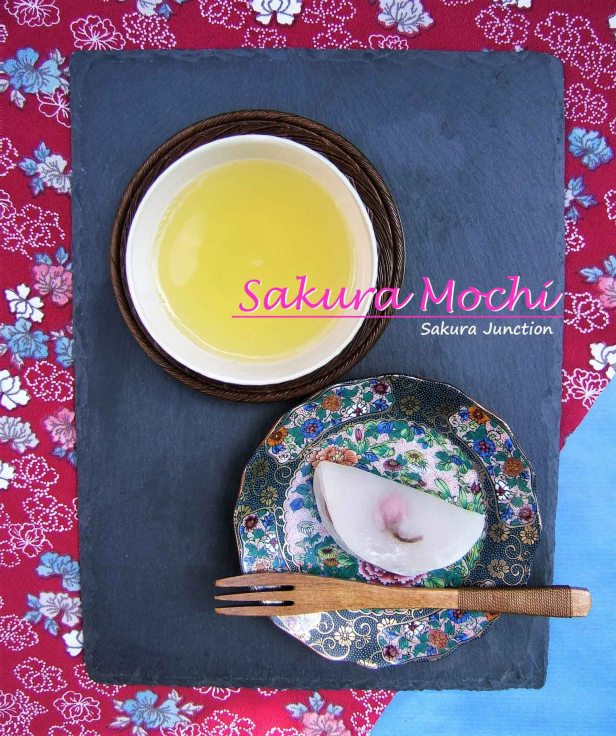
Sakura Mochi

In my garden, Lilac flowers have gone and the marvellous scent of Mock Orange (Philadelphus) flowers is filling up the atmosphere instead now. I know Sakura, Cherry blossom, season is over and I have to admit that I made this sweet a few weeks ago but did not have a chance to post here.

Sakura Mochi

It is a ‘Mochi’ type sweet with a hint or two of Sakura Cherry Blossom essence.

Sakura Mochi

So what is the Sakura essence that I added to this sweet?

Continue reading

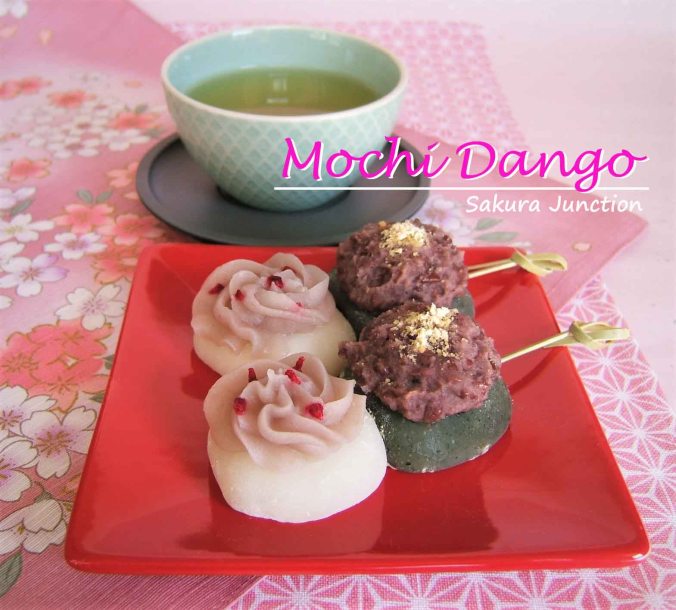
Mochi Dango

As a part of the story of ‘Hanami’ (Cherry Blossom viewing) I have introduced a sweet called ‘Hanami-Dango’ in April. It is a tri-coloured Mochi on a skewer which is a traditional and popular sweet in Japan. Yes, it is a tradition that Hanami-Dango is composed of three balls in green, white and pink colours. I also explained why it has to be in those colours and why in that order. However, It is my nature to try arranging things to create something different and Dango is no exception so I made un-traditional Dango.

Mochi Dango

This is Mochi Dango with two types of Mochi and toppings.

Mochi Dango

Continue reading

Kabuto – the Samurai Helmet

The month of May has just started. The biggest event in this month is on the 5th which is called ‘Kodomo-no-Hi’ the Children’s Day. It is the day we celebrate the healthy growth and happiness of children and do some ceremonies or eat some special food on this day. I have introduced some of the traditions we do last year over two posts.

Kabuto 4Last year I made two sweets in this Kodomo-no-Hi theme. One is ‘Koinobori’ the Carp and the other one is ‘Shobu’ the Iris and I wanted to make something different this year.  I got an idea from some object we make with Origami. The photo on the right side is the thing  I used as the base design. I hope you can guess what it is.

It is a ‘Kabuto’ the Samurai Helmet made with Origami.

140501162645_0

‘Kabuto’ the Samurai Helmet

So for this year’s Children’s Day I made ‘Kabuto’ the Samurai Helmet in Origami style with Japanese sweet ‘Nerikiri’.

Kabuto2

Continue reading

Yomogi Mochi

Winter in Japan is very cold and snowy but once Spring comes all the plants in the field and mountain start to grow rapidly. As you might know already Japanese like to add some seasonal touch into food and it can be a shape or some flavour added to create a taste of the delightful season.

Yomogi

Yomogi

One of the wild Plants we traditionally add into making Mochi is ‘Yomogi’ leaves. It is a type of Mugworts (Artemisia indica var. maximowiczii) and it used to grow anywhere by the road or field. The upper side of leaves is dark green and the lower side is white-ish colour covered with tiny hair like structure. When you mix the leaves into a sweet it gives a dark green colour but what we like the most about using this plant is the very distinctive slightly bitter flavour that it gives. When it’s added to sweet and combined with sweet bean paste the bitterness of the leaves enhances the sweetness of the bean taste and creates the harmony in flavour.

Yomogi Mochi

I created this Yomogi Mochi as one of the sweets for having during the ‘Hanami’ Cherry Blossom viewing occasion.

Yomogi Mochi4

Continue reading

Hanami-Dango for viewing Sakura Cherry Blossom

Sakura17-2

The Cherry tree for fruit in my garden is in full bloom too

We are in the middle of the full Cherry Blossom season in London. There is a traditional custom called ‘Hanami’ (‘Hana’ means flower/ blossom and ‘Mi ((Miru))’ means to look/ watch) that people picnic under a cherry tree and enjoy eating & drinking whilst viewing the beauty of Sakura. 

We also have a proverb ‘Hana yori Dango’ which means ‘Food comes before Flower (Beauty)’. This describes that although viewing Sakura blossom is enjoyable, it cannot beat the delight of eating delicious food.

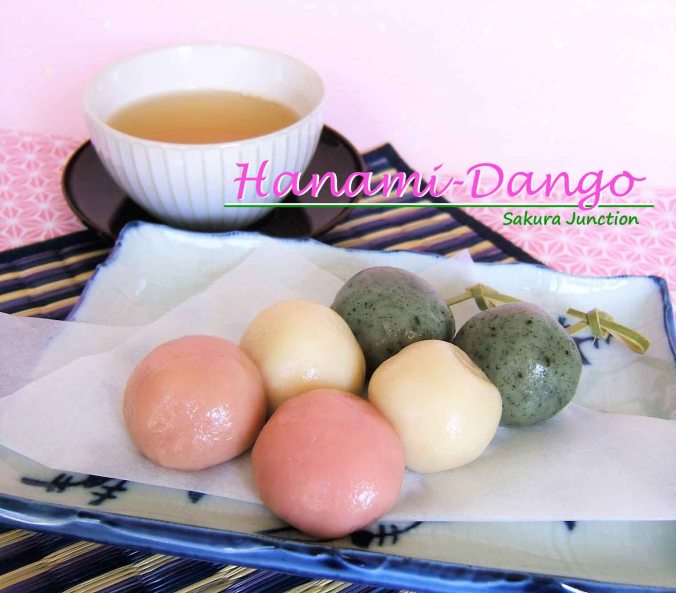
There is a sweet during this Sakura season called ‘Hanami-Dango’. It is composed of three balls of a ‘Mochi‘ type sweet in tricolour of Green, White and Pink stuck together with a skewer. But why these colours and why in this order? There seems several theories behind this colour scheme but the one I like is like this. ‘White’ is a symbol of ‘Snow=Winter’, ‘Green’ is the ‘New Leaves’ just about coming out from under the snow and ‘Pink’ is the colour of ‘Sakura=Spring’. So all these colours together explain the season which people have longed for the arrival during the long cold winter.

Hanami-Dango

I made Hanami-Dango with Tofu this year. Why Tofu? You can use water instead but by adding Tofu the Mochi Dango becomes softer and bouncier texture and the softness lasts longer. You can make this in almost the same way as the ‘Shiratama Dango’ I introduced before.

Hanami-dango2

Continue reading