Wagashi Making Workshop in London – Autumn Colours

Dear Wagashi Lovers,

The clock has just turned back to Winter time here in the UK and we are officially in Autumn now. When we talk about Autumn in Japan, the thing we cannot forget is ‘Momiji’ Japanese maple. Also as a part of British culture Guy Fawkes night, the 5th of November, is something significant for next month.

Wagashi Making Workshop – Autumn Colours

So, in next month’s Wagashi workshop we are going to create these three sweets.

  • ‘Momiji’ Japanese Maple
  • Fallen Leaf
  • Firework

Each piece has a different centre filling so you can enjoy the unique flavour in each sweet as well as the pretty creations.

*All of them are vegan and free from gluten & major allergy sources.

No experience is necessary. Come along with your friends and family for a fun and memorable afternoon.

[Details and Tickets] Please go to the detail page from here

See you there!

Japanese Sweets Making Workshop in London

Come join us for an afternoon of creating delicious Japanese sweets at our in-person event. Get into the Christmas spirit and learn how to make traditional Wagashi treats with a festive twist.

Wagashi is the general term for Japanese sweets and there are many types. In this workshop we will make three designs of the fresh type of Japanese sweet called ‘Nerikiri’. These are often accompanied with a bowl of Matcha tea in a tea ceremony. Although it is traditionally Japanese, the design can be contemporary and this time we are going to make three designs in the Christmas theme. They are all vegan and gluten free.

No experience is necessary, as our expert instructor will guide you through the process step by step. Bring your friends and family along for a fun and memorable experience. (*Suitable for ages 12+ yr, but we advise children are accompanied by an adult on a separate ticket.) Don’t miss out on this unique opportunity to learn a new skill and enjoy some tasty treats! You can take home and consume all your creations.

[Link to the Details & Tickets below]

Look forward to seeing you there!

Christmas Wagashi Sweets!

Just one week to go till Christmas! I know we live in uncertainty at the moment especially in the UK. However, how about having Japanese sweets with your family for this year’s Christmas? I know it will be difficult to gather with many friends but you can have a little cheerful time with your family by sharing these little festive sweets.

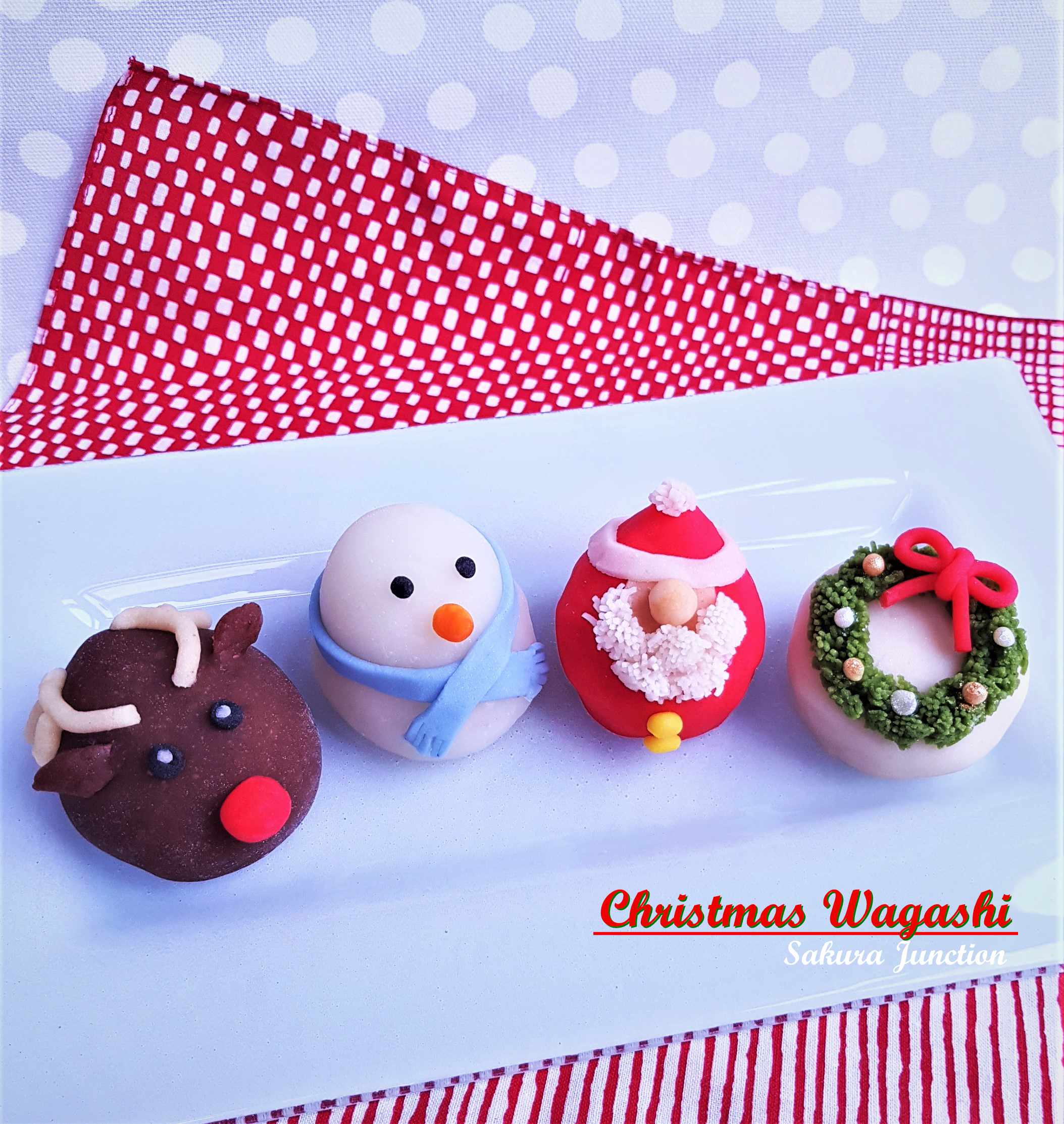
The four festive sweets have all different centre filling and are going to be in a box set.

The Wagashi members are

  • Father Christmas: Nerikiri with smooth Adzuki (red) bean paste filling
  • Rudolf: Mochi type with Sweet Chestnut filling
  • Snowman: Mochi type with Yuzu flavoured filling
  • Christmas Wreath: Nerikiri with Matcha flavoured filling

They are all Vegan and Gluten free.

The Christmas Wagashi Box are available to preorder from here now and you can collect it from the Havan Store (262 Kensington High St, London) between the 22nd- 24th December.

*PLEASE NOTE: This box set is for collection only!

It’s a Watermelon indeed!

In the previous post, I introduced my Mochi Watermelon. It’s a Mochi-type Japanese sweet which looks like a Watermelon on a tiny scale. So on this post, I’d like to show you what the inside of the sweet looks like.

The inside of Mochi Watermelon

So this is what the inside of the sweet looks like.

Continue reading

Mochi Watermelon in London

I have been creating several Japanese sweets with summer fruits. They are mochi with nectarines, coconut & pineapple etc and the newest version are these ones in the photo. It’s Mochi Watermelon.

Mochi Watermelon

They are Mochi type sweets in the shape of Watermelons. The centre filling was made with plenty of watermelon juice so it is not just the shape that the sweet is like a watermelon, but the flavour is the real too. For the fruit seeds I added some black sesame seeds inside. I was a little sceptical for adding coarse ingredient into a smooth sweet, however, it was a big delight to find out the little crunch of sesame seeds gives a great texture in your mouth.

These sweets are Vegan and Gluten free.

These Mochi Watermelons are one of the Japanese sweets available for you at the Havan Store (262 Kensington High St, London) weekends now with pre-order. Another available sweets are Matcha Strawberry Mochi Daifuku and Coconut & Pineapple Mochi.

Mochi Mont Blanc

When is the best season for having Mont Blanc sweets? It’s using chestnuts so I assume it must be Autumn. However, being a chestnut food lover there is no such thing as a bad time for having Mont Blanc for me.

Mochi Mont Blanc

So I created this Mochi version of Mont Blanc. On top of a soft mochi type sweet plenty of chestnut cream swirled up. It was a little hard to squeeze out chestnut paste and it does not look as I wanted. However, it is a hand/home-made sweets after all. If it tastes good, who cares.

Continue reading

Hina Mochi

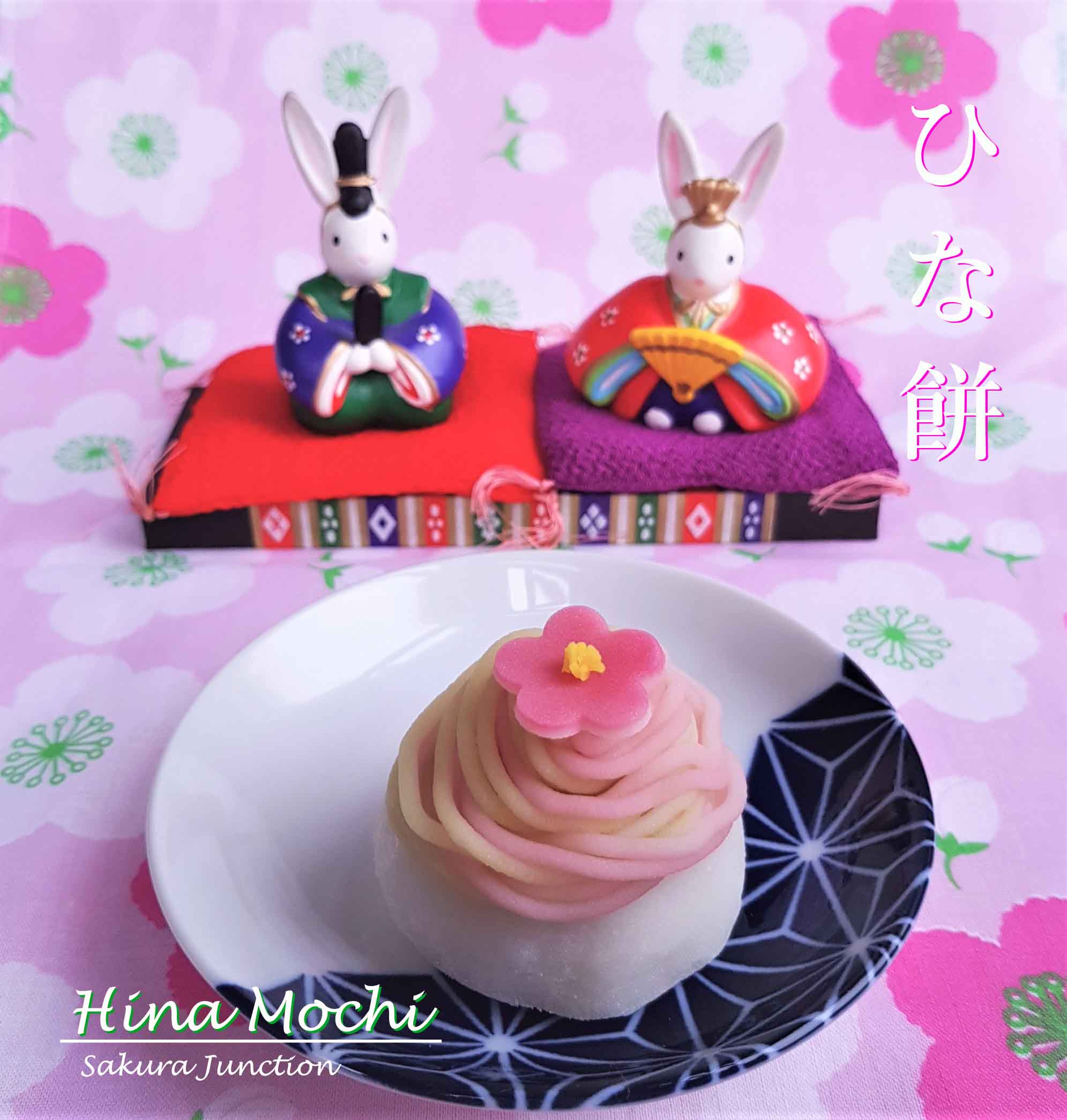
The 3rd of March, was Hina-matsuri the Girls’ Day in Japan. People celebrated the girls’ healthy growth by placing Hina-dolls and having some special food and drink on this day. The most famous meal for this day is Chirashi Sushi with clear soy sauce based soup with clams. Since it is the flowering season of Plum tree, the day is also called Momo-no-sekku which means Plum blossom day. In sweets wise we have Hishi-mochi, a diamond-shaped tri-coloured mochi in green, white and pink, and Hina-rice-crackers etc.

Hina-Mochi

I made a Mochi type sweet for this year’s Hina-matsuri. What I wanted to create was a mochi which reminds of Hishi-mochi sweet.

Continue reading

New Year and Kagami-Mochi

The transition period from the end of a year to New Year in Japan is interesting. Traditionally we close a year by listening ‘Joya-no-kane’, 108 gongs of a huge bell at a Buddhism temple. In the Buddhism world it is believed that each person has 108 evil passions so each time hitting the bell it is removing our passion from us before starting the new year.

However, when we celebrate the New Year in a totally Shinto style. Of course we are all sin-less thanks to the Joya-no-kane on the previous night so it is a happy celebratory morning. When I was a child my family used to have a morning bath and changed into brand new underwear. When we sat at the table the first thing to do is haveing a little alcoholic beverage called ‘O-toso’ in a flat goblet and hope that all family would be well and healthy all through the year. We moved onto the breakfast having ‘O-sechi’ (special New Year meal prepared previously) and ‘O-zoni’ (Mochi in broth).

There are so many other customs we do only in New Year but one of them is placing ‘Kagami-Mochi’ in certain places. It is basically a set of two round mochi ( which are pounded glutinous savoury rice and not the dessert mochi sweets with ice cream inside) with a citrus fruit ‘Dai-dai’ on top. Normally it also gets decorated with some green leaves and white paper cut into Shinto style, but how you decorate it depends on the family.

Kagami Mochi

All the things I wrote above are the customs in Japan. I’ve been living in the UK for a long time and haven’t done much traditional custom in the past, however, I felt I wanted to do some for this year so I made Kagami-mochi.

Continue reading

Tsukimi Dango

How was the weather where you are yesterday? It was the day the full-moon should be seen last night that people in Japan celebrate and enjoy viewing the beauty of it. By hoping to see the beautiful full moon we traditionally eat round (moon-shaped) Mochi. However, the shape of the Mochi varies depending on the area.

Tsukimi Dango

I was hoping to see the beautiful full moon and made two types of Tsukimi Dango. ‘Tsuki’ means moon and ‘Mi (Miru)’ means to view in Japanese.

Continue reading