Look what I’ve got …

135 Apples!!
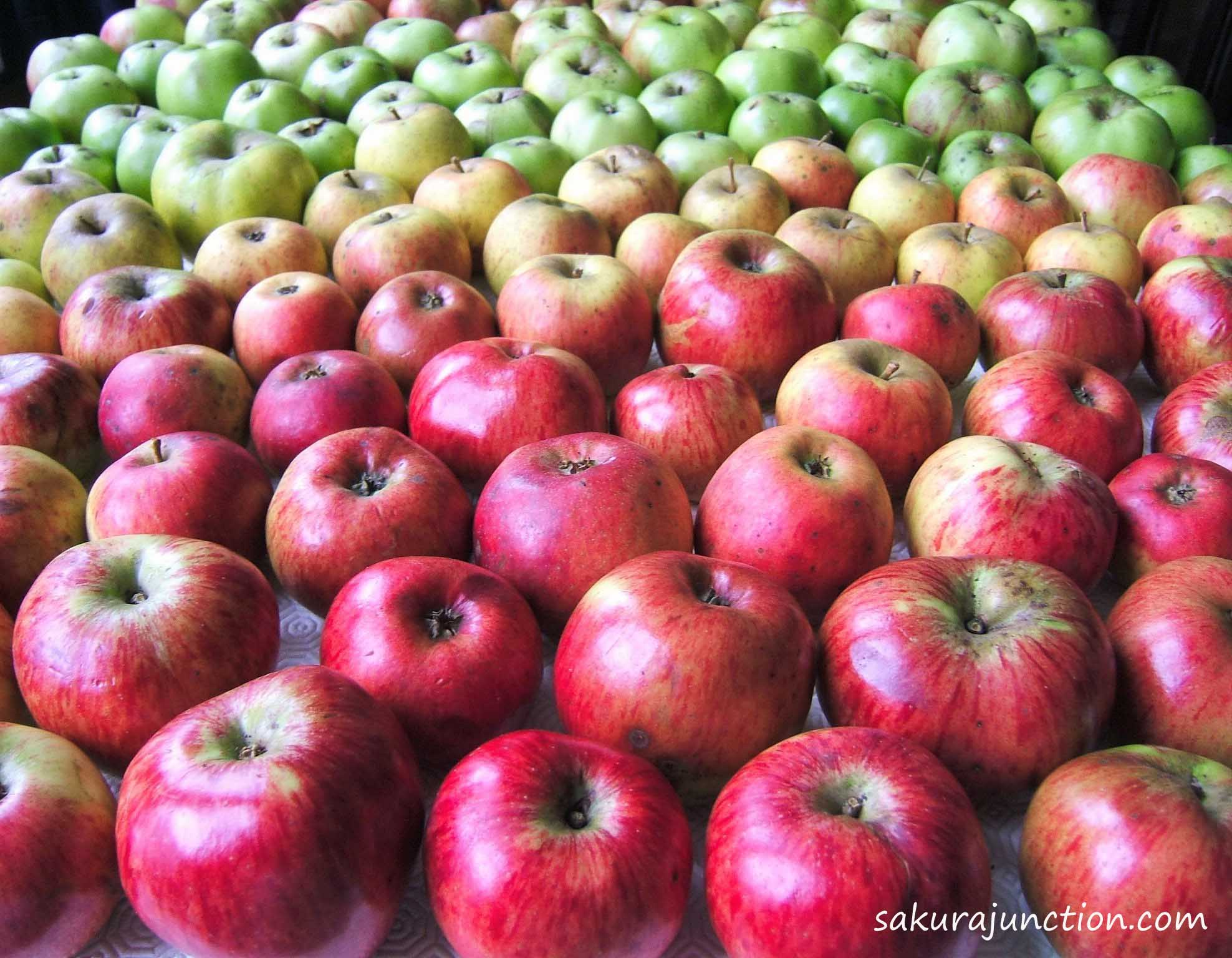
What can I make with these?
Look what I’ve got …
What can I make with these?

So it is officially Autumn now. Whilst I stayed in Japan I had a chance of eating ‘Kuri Gohan (Rice with Chestnuts)’ twice. It is one of the seasonal food you MUST have in Autumn.
I visited a famous land of ‘Kuri (Chestnut)’. I spotted great looking Chestnuts sold at a tiny train station so I brought some back home.


‘Drinking Kale? That must be awful!’ That was what I was thinking until two days ago.
I have a food processor but did not own a juicer/smoothie maker until recently so I never tried making a smoothie before. A small glass of freshly squeezed orange juice first thing in morning is just good enough to me and I have never particularly wanted having a smoothie before. However, since I started my blog I have been reading posts about a smoothie on fellow bloggers. I was convinced that a Kale Smoothie is easy to make, good for health and also delicious!
When the juice maker came to my house I thought ‘Hmmm, I’ve got some organic Purple Kale in my fridge and also some fruit. I have a blender now … Why not try making a some smoothie with Purple KALE?’.

It has been Blackberry season in England. It is good to eat seasonal food. That is Macrobiotic Diet. I am very disappointed that I managed picking them only once this season … 😦 It is nearly the end of the season now so it is very unlikely that I could get any more decent berries …

During the season in almost every year I make a tart with Blackberries, except for this year. But this year I made cup cakes with them instead. I have to say it was rather successful! I am annoyed that I could not make the tart but I am happy about these cup cakes so that I am sharing the recipe here with you.
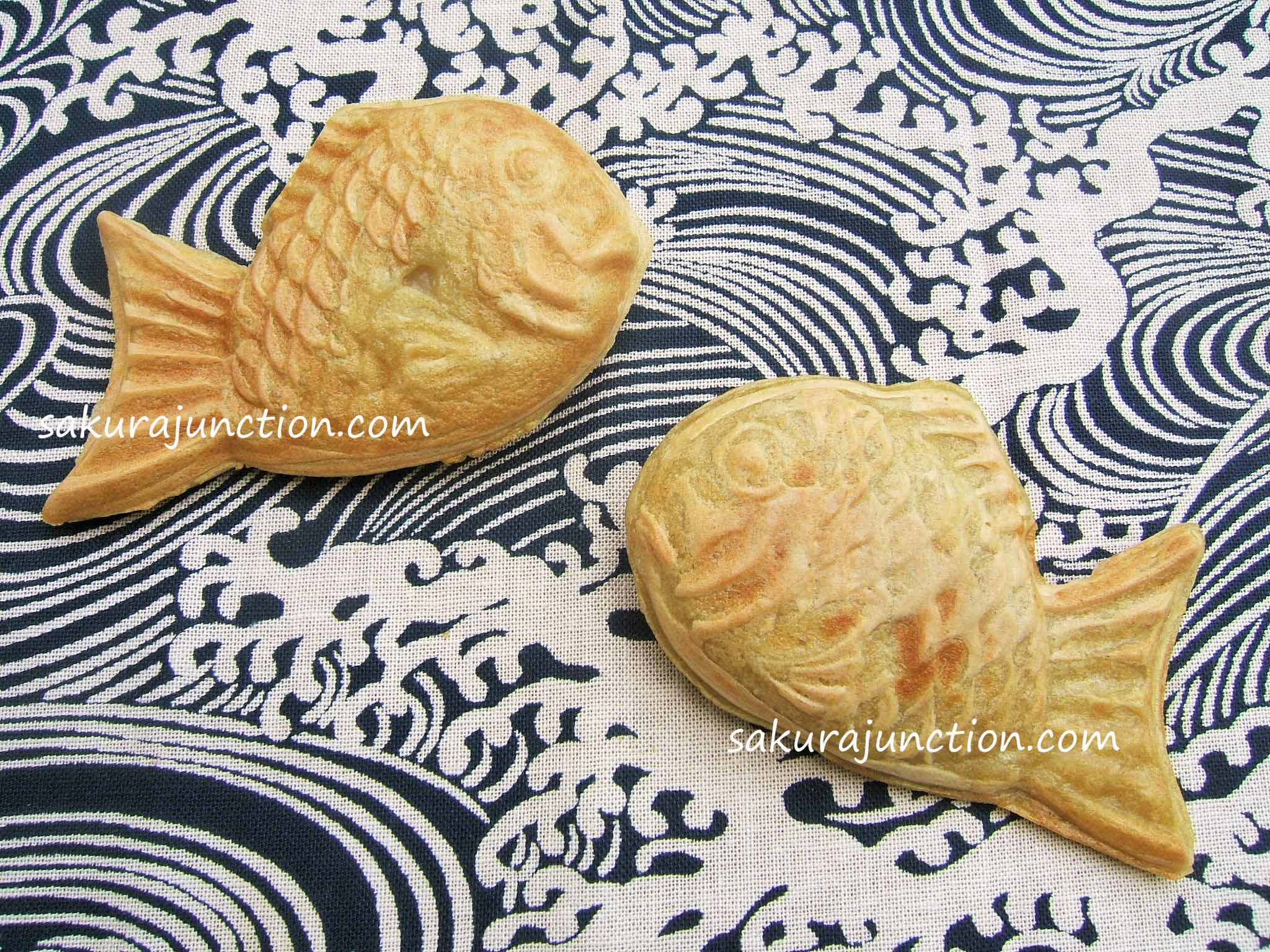
So my fist post after ‘How to Make Tsubu-An’ is ‘Tai-Yaki’. It is one of the most popular street foods in Japan. The name ‘Tai’ means ‘Sea Bream’ and ‘Yaki’ means ‘something baked or grilled’ in Japanese. Although it is called ‘Tai/Bream’ it has sweet filling, which is normally bean paste, and not having any fish at all. It is just a fish shaped sweet.
It is a waffle like sweet filled with traditionally ‘Tsubu-An‘ centre. Recently people started using some new fillings but Tsubu-An is still the most popular one. That is just because it is the best combination & simply delicious.

Tai-yaki with Tsubu-An & ‘Shiratama (mochi)’ filling

Hooray! I can finally post ‘How to Make Tsubu-An’ here, so after this post I will be able to start making more Japanese Sweets and post on this blog.
As I mentioned before ‘An’ (or ’Anko’, they are same thing) is the main component of Japanese Sweets. It is normally a sweet paste made of beans. There are mainly three types of An (Anko) used for Japanese Sweets and they are ‘Tsubu-An’, ‘Koshi-An’ and ‘Shiro-An’.

‘Tsubu-An’ has Azuki bean’s skin left and not sieved so it’s got more of a coarse texture among all the other ‘Anko’. And maybe because of this coarseness it is tended to be used for more casual Sweets. It needs less procedure to make Tsubu-An but that is not the reason I make this type more often. I like Tsubu-An’s texture the most. It is very versatile. If you are interested in making Japanese Sweets, Tsubu-An making is the great place to start.

 I had these plums. They were organic. I was looking forward to tasting them, but was disappointed … they did not have any sweetness. How is it possible that fruits are not sweet, I wonder. So I could not eat them fresh but I had to used them. I was going to bake a cake with them but how? … Umm, OK caramelised a bit before baking!’ That was what I was thinking.

I mentioned about Japanese Summer tradition in food – ‘Chilled Ramen’ before. There is another Must-Have in Summertime in Japan. That is ‘Kakigori‘ – the Shaved Ice!

It is the same as the Chilled Ramen, ‘Kakigori’ also has a traditional Flag to decorate at the entrance of restaurants letting people know that the shop serves it. Apparently the design of this flag has been more or less the same for more than 100 years. The red part in this flag is a Japanese Kanji character ‘氷- Kori‘ which means Ice. The blue part is obviously the sea that is the symbol for Summer and also there for making you feel Cool I believe. And the green part is two birds called ‘Chidori (Plovers)’. Whenever you see this sign you feel the summer is there and you want to have some shaved ice.

This sweet might look like a normal baked Western cake. But it’s not really because …
I like steamed cake. It has a much lighter texture than a baked cake. I haven’t eaten any Japanese sweets for a while so my body started craving for something with some ‘Anko’ in it. This is how this cake was born in my kitchen.


When the temperature starts rising and Summertime is coming closer, you see these kind of poster or flag at the entrance of restaurant in Japan.
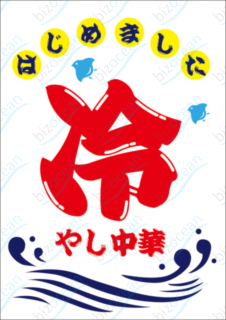
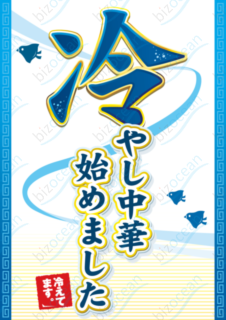
It says ‘We have started serving Chilled Ramen’. Oh yes, Chilled Ramen! We like Ramen very much and we eat it cold too. It is our Summer Tradition. Summer in Japan is very hot and humid. We cannot survive without eating Chilled Ramen!
 Sakura Junction