Yesterday, the 22nd of September, was the Autumnal Equinox Day this year. One week period around that day is called ‘Higan’ in Japan and people cleanse ourselves spiritually by doing right things and cleaning ancestors’ graves.

Tri-colouered Ohagi
On the culinary side of this tradition during the week we have sweets called ‘Ohagi’. It is a mochi type sweet with half pounded sweet rice with ‘Azuki’ sweet red bean paste. Some of them are flavoured and decorated with ‘Kinako’ toasted soyabean powder, green seaweed or black sesame seeds.
Ohagi Dango
I love Ohagi and can eat 2-3 pieces of them easily all one go! It is normally quite big and filling, and for the people who’d like to try all the flavours for a teatime it might be a little hard. So I made a version of all three types of sweets on one skewer! In this way everyone can taste all the flavours. 🍡


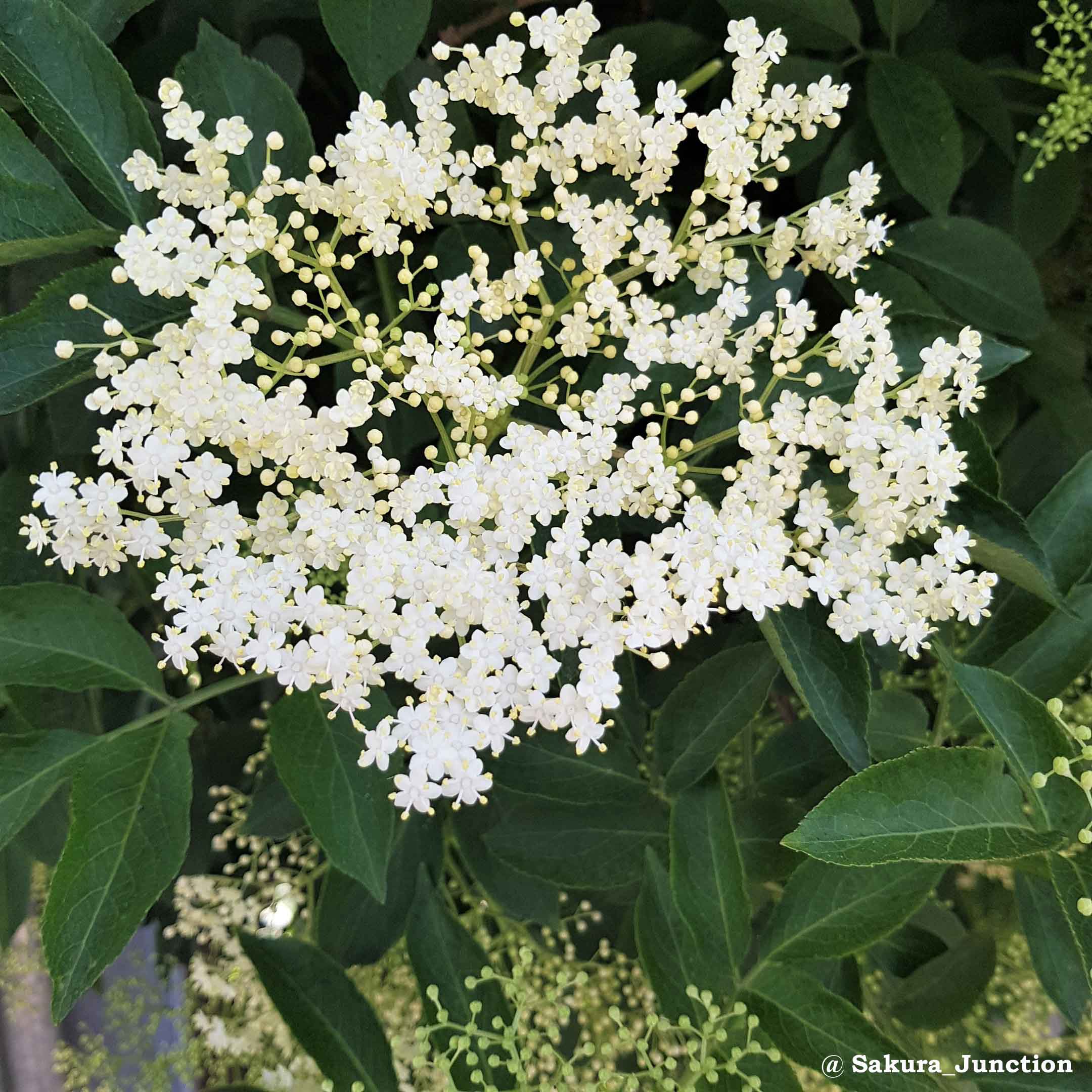 During the Elderflower season in May I made two things to preserve the loveliness of the flowers. One of them is the famous Elderflower Cordial and the other one is Elderflower Champagne. Both are made in a similar way by keeping fresh flowers in a sugary water with lemon and lime to extract the flavour and the scent of flowers into the liquid. You can make a refreshing summer drink by adding water to a little amount of the cordial.

 There is one plant that looks great in the rain. It’s Hydrangea. The flower is normally pink or blue and it’s said that the acidic soil makes the flower blue and the more alkaline soil makes it pink. It’s now in the flowering season of the water loving Hydrangea and the rain enhances its beauty. I think the pompom-like common Hydrangea looks pretty, however, the one I like is the Lacecap Hydrangea which has a little more delicate touch.

 My parents once had a Clematis plant in their front garden. In springtime it opened hundreds of beautiful flowers in lilac colour. Although the plant has sadly disappeared since then, the sight of the beauty stays in my memory forever and I wanted to make it as Wagashi sweet. The Clematis sweet I made

 Sakura Junction