The Wagashi Day

Do you know today, the 16th of June, is “the Wagashi Day”? ‘Wagashi’ means Japanese Sweet in general but how is this day connected with Japanese Sweet and what do people do this day?

The Wagashi Day and Sixteen Sweets

It started in the year of 848 in the Heian period when plague was spreading throughout Japan. With the hope that this disease would stop and everybody would live healthily and happily, the Emperor Ninmyō changed the era to Kashō and prayed to the God with an offering of sixteen Japanese sweets. It was on the 16th of June and the number of the sweet offering was associated with the date. Since then this day became the Wagashi Day and people ate Japanese sweets and wished a happy life. This custom carried on until the Edo period.

Sadly the custom diminished sometime later, but in 1979 Japan Wagashi Association reintroduced the Wagashi Day back into society by wishing that people would continue appreciating the magnificent Japanese sweet and carry on the beautiful food culture for future generations.

Although I have liked eating Japanese Sweet Wagashi since my childhood, it is not that long ago that I started making it myself. Since then I realised that Wagashi is such a versatile sweet which is made from very limited ingredients of just beans, rice powder and sugar basically. By wishing this world becomes a safe and wonderful place to everybody I re-introduce 16 sweets of mine that I made last year 2016.

Enjoy your Wagashi Day!  😀

Yomogi Mochi

Winter in Japan is very cold and snowy but once Spring comes all the plants in the field and mountain start to grow rapidly. As you might know already Japanese like to add some seasonal touch into food and it can be a shape or some flavour added to create a taste of the delightful season.

Yomogi

Yomogi

One of the wild Plants we traditionally add into making Mochi is ‘Yomogi’ leaves. It is a type of Mugworts (Artemisia indica var. maximowiczii) and it used to grow anywhere by the road or field. The upper side of leaves is dark green and the lower side is white-ish colour covered with tiny hair like structure. When you mix the leaves into a sweet it gives a dark green colour but what we like the most about using this plant is the very distinctive slightly bitter flavour that it gives. When it’s added to sweet and combined with sweet bean paste the bitterness of the leaves enhances the sweetness of the bean taste and creates the harmony in flavour.

Yomogi Mochi

I created this Yomogi Mochi as one of the sweets for having during the ‘Hanami’ Cherry Blossom viewing occasion.

Yomogi Mochi4

Continue reading

🌸 Sakura, Sakura 🌸

Wow, time passes so quickly! It is already April and we are officially in Spring! This winter was so mild in England and spring has arrived early too. I heard that in several areas in Japan the symbol of Spring ‘Sakura’ Cherry Blossom has been flowering slowly this year and still not fully opened, however, it has been flowering everywhere in London. The trees in the park where I live nearby actually lost most of the flowers and leaves are coming out already. Since I was looking forward to seeing beautiful cherry blossom, it is sad that the best season is going so quickly.

Anyway, when this season comes I have to make some sweet in the Sakura theme for April.

Sakura/ Cherry Blossom

So, this is my ‘Sakura’ Cherry Blossom sweet this year.

Sakura 6

Continue reading

Hina-Doll sweet for the Girl’s Day

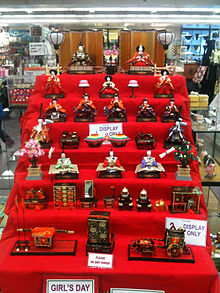
It is the Girl’s Day ‘Hina-Matsuri’ today the 3rd of March. For a few weeks until this day in Japan we place a set of dolls called ‘Hina-Ningyo’ in a room and celebrate the healthy growth and happiness of girls.

220px-hinamatsuri_store_display

from Wikipedia (Hinamatsuri)

There are many different scales in Hina-Ningyo and some gorgeous one is composed of several shelves with a red cloth on top and each shelf is decorated with either some figures or ornaments. The most important part of this is the very top shelf where a male and a female figures are placed. They are the Emperor and the Empress.

There are several sweets that are traditionally only for this occasion. One of them is a diamond shaped sweet in tri-colours of pink, white and green called ‘Hishi-mochi’. Last year I created Hishi-moch with a type of Japanese sweet called ‘Ukishima’ but this year I made the Hina-dolls too.

Hina-Ningyo/Hina-Dolls the Sweet

hina-ningyo-1

Continue reading

Petal Mochi (Hanabira Mochi)

Happy New Year to you all again!  Hope you had great Christmas and New Year’s Day. The first sweet I would like to introduce you in 2017 is this sweet called ‘Hanabira Mochi‘.

Petal Mochi (Hanabira Mochi)

petal-mochi-top-croped2

Hanabira‘ means flower petal in Japanese so I shall call this sweet Petal Mochi.

It is a sweet we traditionaly have only during New Year period. It started in the palace to celebrate a New Year by eating two layers of white and red mochi with some other food. Until the Meiji period the custom spread out to people in the country and the food got simplified onto some similar type of sweet that I made here.

Continue reading

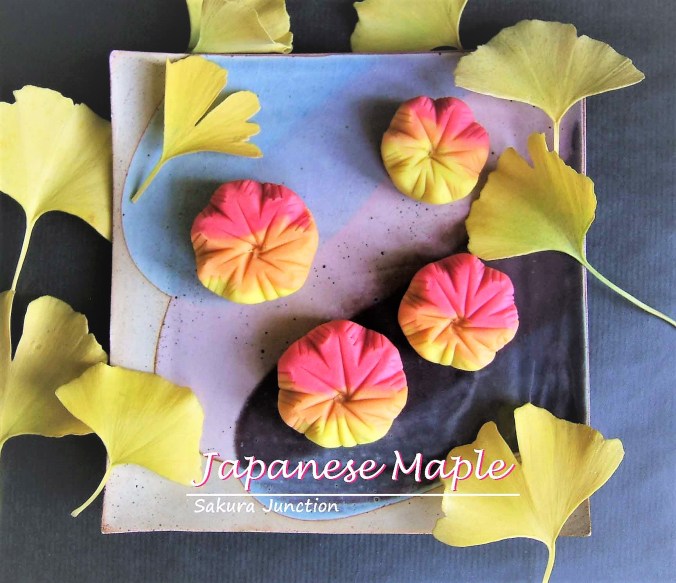
Japanese Maple in Autumn Colour

Day by day Autumn is setting in here in London. First thing which comes to my mind by thinking about Autumn is colour change in Leaves. It would defines as Autumn Colours so it should be the most significant part of this season. In Japan we have four completely different seasons. Warm & beautiful Spring with lots of Cherry blossom, very hot & humid Summer, very cold Winter with deep snow in some area and then … this Autumn. Our Autumn is very between summer and winter, but it is not just that. During the transition period between two totally different seasons a significant temperature change causes the beautiful Autumn Colour in leaves. The Nature is Science. It is amazing!

Japan is a very mountainous country and the sight of mountains in Autumn colour is so magnificent. It does not get defeated by the sight of marvellous view of Sakura, Cherry blossom in spring. We even have a word ‘Momiji-gari‘. ‘Momiji‘ is a Japanese word for Japanese Maple and ‘Gari/Kari‘ means Hunting. Well, we do not hunt/harvest Maple leaves literally but it means that we go out to the countryside to enjoy the amazing view of mountains which are covered in various colours in yellow to red.

The most famous plant with the leaves in Autumn colour is ‘Momiji‘, Japanese Maple (Acer palmatum). I thought it represents beautiful Autumn the most so I made my version of it as a sweet.

Japanese Maple, Momiji

japanese-maple-all3

Yes, we call the plant ‘Momiji‘ not ‘Emoji‘. Please don’t be confused.  😀

Continue reading

Mochi Sweet Chestnut – The Taste of Autumn

Officially it is Autumn now. In the UK the clock has been set back to Winter Time so that morning starts in darkness and the Sun sets very early. The weather has been becoming more and more wet and miserable. On the contrary in Japan Autumn is described as for 1. Sport, 2. Appetite, 3. Arts, 4. Reading Books and then 5. Great Autumn Colour and more!

The reason that “Autumn is for Appetite” is simply because there are so many tasty food that become available during this season. They are Mushrooms (including super Mushroom ‘Matsutake‘), Fruits (such as ‘Kaki’ Persimmon), Sweet Potatoes, Ginkgo Nuts and so on …

However, the delicacy we enjoy the most of all is ‘Kuri’ – Sweet Chestnut. Everybody loves Sweet Chestnut in Japan. I have to say that it is almost like “Kuri = Autumn” for Japanese. We make lots of sweet with Kuri Chestnut and we cook even rice with it.

So inevitably I chose Sweet Chestnut as the material for the sweet of November.

Kuri – Mochi Sweet Chestnut

mochi-chestnut-in-autumn-colour

Continue reading

The Taste of Kyoto: Cinnamon Mochi Wrap (八つ橋ラップ)

Have you been to Japan? Where did you visit? I am sure one of the places you’ve been in Japan must be Kyoto. Everybody loves visiting Kyoto. It is the old Capital City of Japan with lots of temples and Shinto Shrines. You find old fashioned shops standing on narrow stone paved path. You feel like you’ve been Time slipped into 200 years ago.

There is lots of famous food in Kyoto. One sweet many people buy when they visit Kyoto is ‘Yatsuhashi (八つ橋)’. It is a Mochi type of sweet with Cinnamon flavour either soft (Nama-Yatsuhashi) or baked hard. You might think Cinnamon is very western spice but I believe we started using Cinnamon quite a long time ago. It came from China and it still has the Chinese name ‘Nikkei/Nikki‘ as well as the western name.

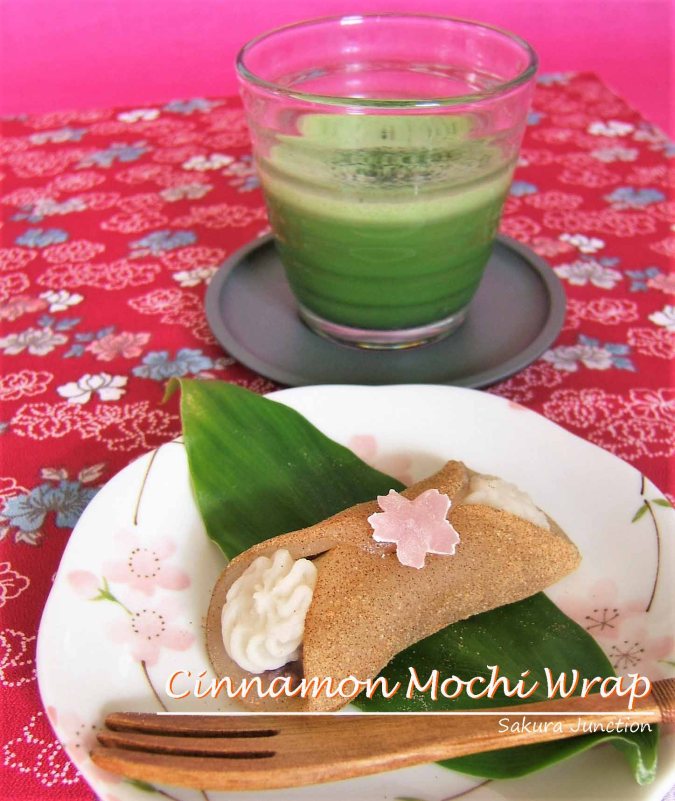
The famous soft type Yatsuhashi is normally cut into a square shape and folded into a triangular by wrapping sweet Bean Paste inside. The spicy scent of Cinnamon is very appetising and it goes well with Tea or Coffee as well as Green Tea.

Cinnamon Mochi Wrap (八つ橋ラップ)

cinnamon-mochi-wrap-yatsuhashi-with-tea

I made my version of Yatsuhashi in a slightly western appearance.

Continue reading

Moon Rabbits

I have roughly explained about ‘Chushu‘ (the Middle of Autumn Day) and the Full Moon viewing custom in Japan in the previous post. However, there is another key character in this Story. It is a Rabbit.

chocolate-moon-yokan-with-rabbits-1

In Japan we say there is a Rabbit living on the moon and makes (pounds) ‘Mochi’ Rice Cake on ‘Jugoya‘ the Full Moon. I think the story started because people in the old days saw a Rabbit shape in the pattern on the Moon.

rabbit-on-the-moon2

However, there are several stories to back up the thought behind it.

  1. This is a story from India. ‘There were Fox, Monkey and Rabbit in a forest and they wondered why they were not human. They thought maybe it was because they did something bad before so they decided to do something good. One day an old man who was very tired and hungry appeared in the forest. Fox, Monkey and Rabbit wanted to help this guy. Fox hunted some animals and gave him some meat. Monkey climbed up a tree and gathered some nuts and fruits for this man. However, although Rabbit searched around he could not find anything for the old man then he asked the man to make a fire. The Rabbit said “I’m sorry I could not find anything for you so please eat me to survive” and jumped into the fire and died. This old guy was actually a god who came to test the three animals’ good deed. He was so moved by Rabbit’s selfless mind and felt pitty on him. He decided to leave the silhouette of the rabbit on the moon forever’.

2. In China it was said that rabbits were making medicine for immortality by pounding on the moon. When this story came to Japan the story changed that rabbits were making ‘Mochi (Rice cake)’ instead of medicine.

Moon Rabbit

Anyway, it’s time to introduce my Moon Rabbits.

moon-rabbit-three

It is Japanese sweet which made of ‘Nerikiri‘ (White Bean Paste with Mochi) and Free from Gluten and Dairy & Oil.

Continue reading