‘Mochi Heaven’ Stall Ended!

The Food Market that I had suddenly decided to have a stall has ended three days ago. In the last three years since I started making Japanese sweet for Kimono shop I have heard that so many people saying ‘I looove Mochi!’. As I said in my posts in the past I had believed that Western people didn’t like Mochi and I was wondering ‘is it really true that these people love Mochi?’ So, my mission was finding out ‘How much do people looove Mochi’!

It is always hard work to prepare food for selling but Making Japanese sweets is very time consuming work and I wasn’t sure I how could be ready until the actual Market day. When I have a stall in a food market I normally prepare all kinds of Japanese sweets but this time I could concentrate on creating different flavours for Mochi and that was a good thing for me.


‘Mochi Heaven’ Stall in a Food Market

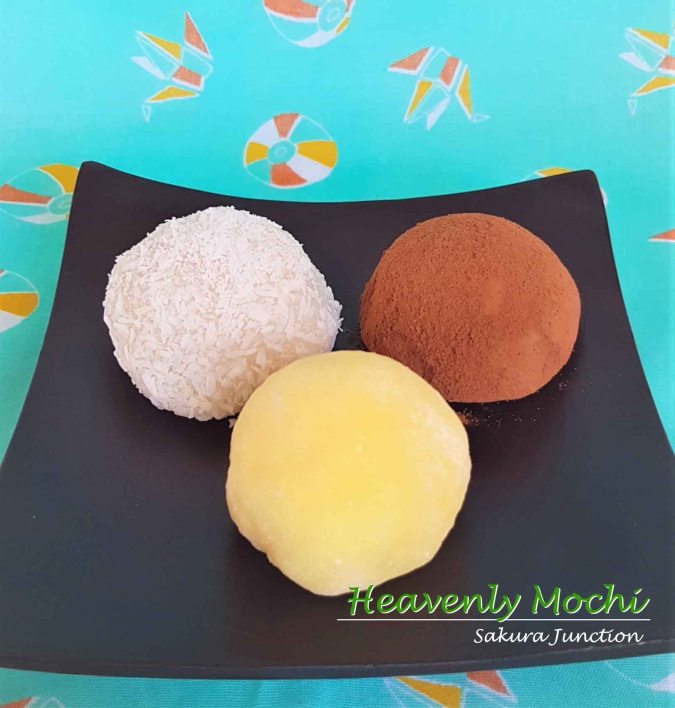
These sweets in the photo were the main line-ups on my stall.

CE Market2-2

Continue reading

Mochi Stall in a Market

I have an announcement. This became rather short notice but I have just decided to have a stall in a local Market this Sunday.


Never Too ‘Mochi’ Stall in Crouch End

My stall will be in the Food Market as a part of the Crouch End Festival. The Crouch End Festival is actually the biggest community festival in the whole Britain which lasts over a week in this villege-like community of North London. It consists of all sorts of entertainment such as music, open air films, art and even a Zombie walk as well as all kinds of food. This year we are going to have a performance of the world famous Crouch End Festival Chorus too. The Food Market is normally held in the Green square in front of the ‘secretly famous’ Hornsey Town Hall (this special building has been used as a film/TV location for such as ‘Bohemian Rhapsody’ and ‘Killing Eve’) which is the central part of this community, but this year the venue will be set in a nearby ‘Stationers Park’ due to the building development work.

I had a stall in this festival several years ago serving all sorts of Japanese sweets. However, this time I wanted to try serving mainly ‘Mochi’ as it has recently became one of the most favourite Japanese sweets for British people lately. I hear so many people saying ‘I love Mochi!’ but I don’t know how much they love it. Although I am a little anxious whether many Mochi lovers would turn up to my stall, I am going to bet it will be great.
Mochi1


Heavenly Mochi Stall in the Food Market

  • at : Stationers Park, Mayfield Rd, London N8 9LP
  • on: the 9th of June (Sun), 11:30 –

I know the venue is not the easiest location to reach if you are not from this area but if you love Mochi, please come to try mine at my stall.

I have been planning to make Mochi in several different flavours and this Polar Bear below is one of the Mochi which is likely to be on the Mochi Stall. If you readers can tell me what your favourite flavour for Mochi is it will be a great help to me!

Mochi2

Hope to see many people turn up there on the 9th of June. See you on Sunday!😊

Mochi Tulip

When you make a Japanese sweet in a flower shape or some decorative pattern ‘Nerikiri’ sweet is the most suitable material. It has a soft marzipan like texture and you can colour or flavour it into anything you like. On the other hand ‘Mochi’ type sweet is more for wrapping up a filling so it’s used for something like a ‘Daifuku’ kind of sweet.

That is why I wanted to try making a flower with Mochi type sweet. It was just a quick experiment so this is not meant to be a finalised precise work but as the spring season is coming I tried making a flower with a Mochi kind of sweet.

Mochi Tulip

So this is the result of my little experiment. I don’t know whether it is clearly seen but it’s supposed to be a Tulip flower made with a Mochi type sweet. I had the image of a pure white colour Tulip with a big green leaf. I wanted to create it as a Japanese sweet.

Tulip Continue reading

Strawberry Daifuku

It is a phenomenon to me that there are so many western people who likes ‘Mochi’ these days. Mochi is Rice Cake and usually we make it by pounding glutinous sweet rice. When I looked back at the time when I started making Japanese food and sweet to friends in England many years ago, everybody disliked Mochi. It could be to do with the gooey texture or quite blank taste I don’t know, but even when Mochi was hot or cold, sweet or savoury it didn’t go well. However, now so many people like it or even love Mochi!

Strawberry Daifuku

I have introduced you Clementine Daifuku two weeks ago. It is a very good version of fruity ‘Mochi’ type sweet. Mochi goes well with Sweet Bean Paste and fresh Fruit. But the most known fruity Mochi sweet is this Strawberry Daifuku.

Strawberry Daifuku

Continue reading

Kashiwa Mochi

The Children’s Day has ended. It was the 5th of May in Japan. There are several traditions people do on that day including eating special food, particularly sweets. One of them is called ‘Kashiwa Mochi’. As you can guess from the name it is a ‘Mochi’ type of sweet and has some kind of central filling inside. The filling can be various but normally it is Sweet Azuki (Red) Bean Paste. The most characteristic feature of the sweet has come from its figure. It is wrapped up with an Oak leaf and ‘Kashiwa’ in its name means Oak in Japanese.

I saw many photos of Kashiwa Mochi on social media. I really wanted to eat it so I suddenly started making my own one on the Children’s Day. That is why I could not post this article in time. However, there was a problem. I didn’t have Oak leaves for wrapping the sweet…

Kashiwa Mochi

This was the solution for having my own Kashiwa Mochi. I made a Leaf with Japanese sweet so the leaf is edible too.

KashiwaMochi1

Continue reading

The Answer is … Clementine Mochi!

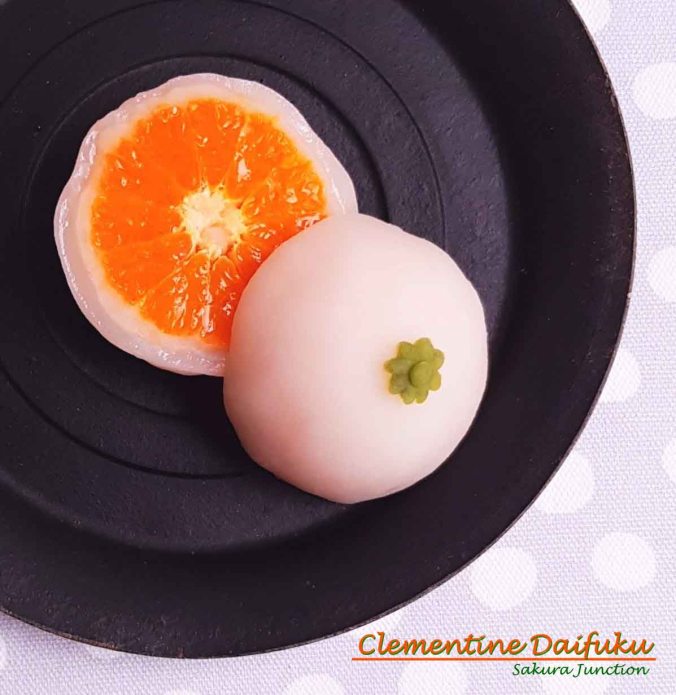
This is ‘Clementine Daifuku’. Daifuku is a ‘Mochi’ type Japanese Sweet and usually filled with Sweet Bean Paste inside the Mochi outer layer. However, the combination of it with additional fruit is great and ‘Ichigo Daifuku’, the one with strawberry, is very tasty and hugely popular. I had seen someone was making Daifuku with tangerine and wanted to try making it myself.


Clementine Daifuku

I made some of these Japanese Sweets with Orange coloured Mochi outer layer and some with white one (natural Mochi colour). It was not that unusual if I left the white sweet as it was, but when I placed the green part on top it looked something so unknown. It made me think it could be a round white aubergine or … what? That was how the ‘Guess What this Sweet’ Quiz started in my previous post.

Clementine Daifuku3

Continue reading

Not Pancake, it was Taiyaki Day!

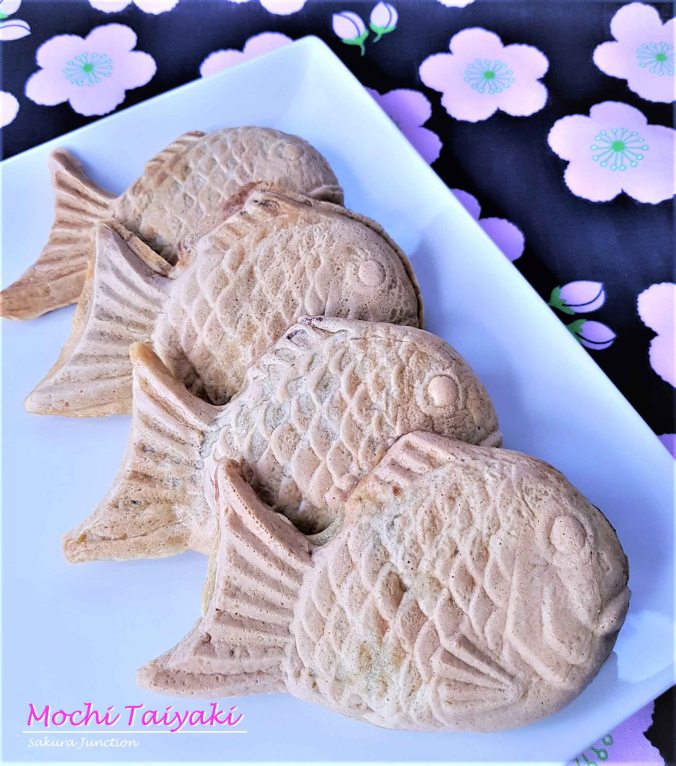
Yesterday was the Pancake Day in the UK. It is the day people make pancake in order to consume the ingredients in the fridge such as eggs and milk before Easter starts. So I tried making ‘Dorayaki’ Japanese Pancake and then … in somehow I failed. The pancake part did not come out well. I was hoping that I would be able to post a photo of beautifully baked Dorayaki pancake here but now I don’t have any photo. It could be because I used one of the brand new frying pan? I will take a revenge on making great Dorayaki sometime soon, but in the meantime I am going to show you the photos of my recent ‘Taiyaki’ fish shaped Bake instead.


Taiyaki with Shiratama Mochi Balls

These are the Taiyaki I made a few days ago for my teatime.

taiyaki 2 Continue reading

Hichigiri for Hinamatsuri

Usa hinaIt was ‘Hinamatsuri’ the Girl’s Day yesterday. I have mentioned about the Japanese culture of praying for the good health and happiness of girls on the 3rd of March on my previous post. We decorate our home with Hina Dolls of Emperor and Empress as well as some other figures on red carpeted shelves, that are between five to seven shelves (or even more) traditionally. I created some sweets in shapes of the dolls in the past. On this day we don’t just decorate but also eat a sweet called ‘Hishimochi’ which means diamond-shaped Mochi which I also have created it once before.

There is one sweet that people particularly in the Kyoto area eat for the Girl’s Day but I was not familiar with it until recently. The sweets are called ‘Hichigiri’. I heard that this sweet was born in the palace in the old time in probably the Heian period. People needed to make many Mochi to serve so many guests that they were too busy to roll up each Mochi piece into a ball shape. Then they just pulled small pieces and left the pulled shape as it was. If you understand ‘Kanji’ (Chinese) character you know Hichigiri  (引千切) means literally ‘pull and cut into a thousand’. I could imagine that the Palace kitchen was so busy.😆

Hichigiri

So this year I tried creating these sweets for Hinamatsuri.

Hichigiri 1 Continue reading

Momo-Mochi Matcha Zenzai

We are in March now and going to have one of the Japanese customs tomorrow on the 3rd of March. It is Girl’s Day called ‘Hinamatsuri’ and we pray for the health and happiness of girls by decorating special Hina Dolls in our houses on the day. This day is also called ‘Momo no Sekku’ which means Peach Festival and we place peach flower in a room or eat peach fruit or peach flower shaped sweets. I have created some sweets in a shape of Hina dolls in the past but I made a simple dessert for the coming event this year.


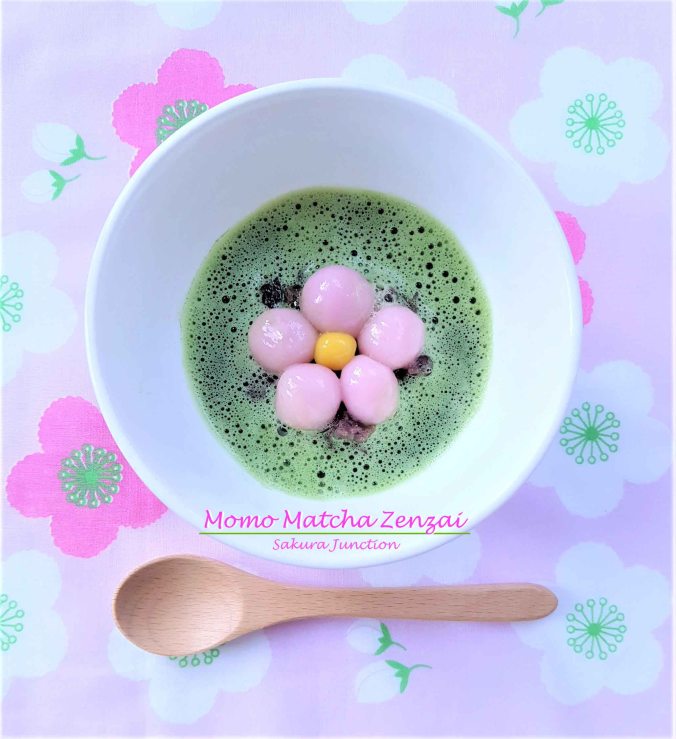
Momo-Mochi Matcha Zenzai

Matcha Zenzai

I created ‘Momo’ (Peach) flower shape in a bowl and had it with Matcha tea in ‘Zenzai’ style. Zenzai is a sweet soup type dessert that we normally make with sweet Azuki (Red) bean paste during a cold season. I created this Matcha version to make it suitable for spring. It is very easy to make at home so I am going to share how to prepare this dessert.

Continue reading