Yomogi Mochi

Winter in Japan is very cold and snowy but once Spring comes all the plants in the field and mountain start to grow rapidly. As you might know already Japanese like to add some seasonal touch into food and it can be a shape or some flavour added to create a taste of the delightful season.

Yomogi

Yomogi

One of the wild Plants we traditionally add into making Mochi is ‘Yomogi’ leaves. It is a type of Mugworts (Artemisia indica var. maximowiczii) and it used to grow anywhere by the road or field. The upper side of leaves is dark green and the lower side is white-ish colour covered with tiny hair like structure. When you mix the leaves into a sweet it gives a dark green colour but what we like the most about using this plant is the very distinctive slightly bitter flavour that it gives. When it’s added to sweet and combined with sweet bean paste the bitterness of the leaves enhances the sweetness of the bean taste and creates the harmony in flavour.

Yomogi Mochi

I created this Yomogi Mochi as one of the sweets for having during the ‘Hanami’ Cherry Blossom viewing occasion.

Yomogi Mochi4

Continue reading

Easter Mochi Eggs & Cinnamon Nest

It’s Easter weekend. In some shops during this season you see many sweets in the Easter theme. They are mainly chocolate in either a rabbit bunny shape or eggs and chicks. I know it is an event for Christian people but I cannot help myself not to think of some Japanese sweet to make for this occasion.

I have made some chicks with Japanese sweet ‘Nerikiri’ before so this year I wanted to make something else. When I was making ‘Hanami-Dango’ (in my previous post) I got the idea of making eggs with the ‘Mochi’ sweet and also some other sweets to compose the nest to place eggs in …

Easter Mochi Eggs & Yatsuhashi Nest

So this is the Japanese sweet I thought for the Easter theme this year.

Easter eggs.2

Continue reading

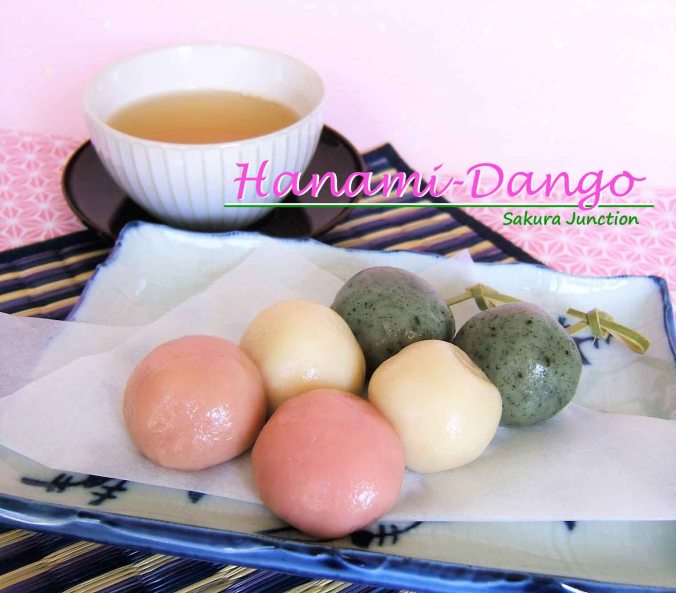
Hanami-Dango for viewing Sakura Cherry Blossom

Sakura17-2

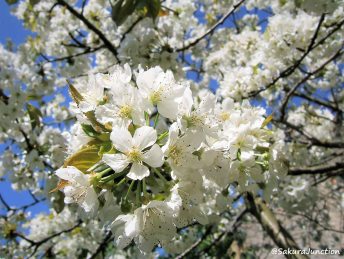
The Cherry tree for fruit in my garden is in full bloom too

We are in the middle of the full Cherry Blossom season in London. There is a traditional custom called ‘Hanami’ (‘Hana’ means flower/ blossom and ‘Mi ((Miru))’ means to look/ watch) that people picnic under a cherry tree and enjoy eating & drinking whilst viewing the beauty of Sakura. 

We also have a proverb ‘Hana yori Dango’ which means ‘Food comes before Flower (Beauty)’. This describes that although viewing Sakura blossom is enjoyable, it cannot beat the delight of eating delicious food.

There is a sweet during this Sakura season called ‘Hanami-Dango’. It is composed of three balls of a ‘Mochi‘ type sweet in tricolour of Green, White and Pink stuck together with a skewer. But why these colours and why in this order? There seems several theories behind this colour scheme but the one I like is like this. ‘White’ is a symbol of ‘Snow=Winter’, ‘Green’ is the ‘New Leaves’ just about coming out from under the snow and ‘Pink’ is the colour of ‘Sakura=Spring’. So all these colours together explain the season which people have longed for the arrival during the long cold winter.

Hanami-Dango

I made Hanami-Dango with Tofu this year. Why Tofu? You can use water instead but by adding Tofu the Mochi Dango becomes softer and bouncier texture and the softness lasts longer. You can make this in almost the same way as the ‘Shiratama Dango’ I introduced before.

Hanami-dango2

Continue reading

‘Momo-no-Hana’ Mochi

I feel the sky looks brighter these days. The atmosphere is lighter and the air is warmer. I sense that the spring is coming nearer day by day. I even feel birds’ song sounds so much more cheerful. Maybe they are happy that spring is just around the corner.

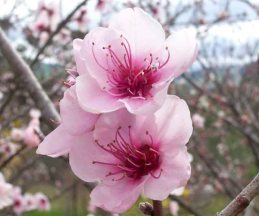
Peach flowersAbout two weeks ago I posted that the 3rd of March was the Girls’ Day in Japan. The symbol of the Girls’ day is ‘Momo-no-Hana‘ Peach Flower, and this flower is also the sign for the arrival of spring. I made a Japanese sweet inspired by Peach flower for this month.
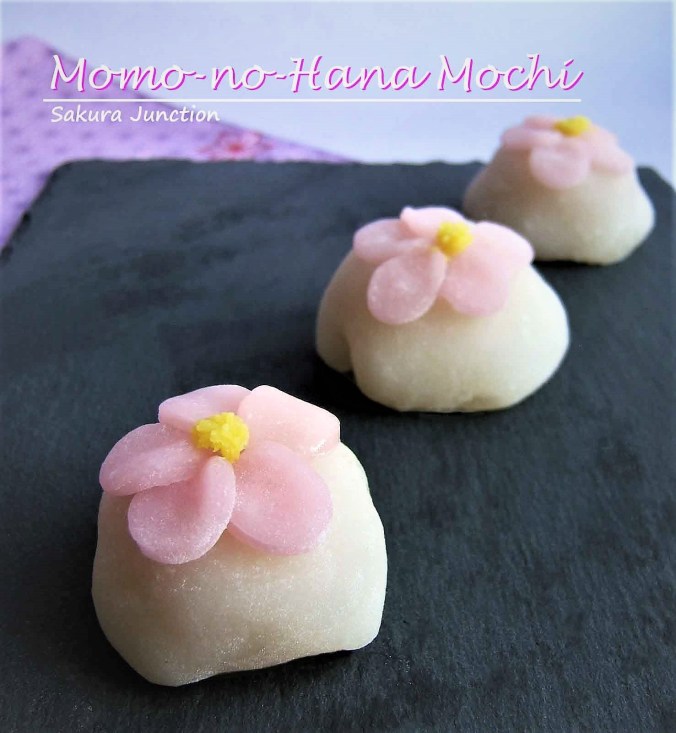
 

‘Momo-no-Hana’ (Peach Flower) Mochi

Momo no Hana Mochi 6-22

Continue reading

Mochi Kaki/Persimmon

It was until the last few years that I did not see any Kaki/Persimmon (Sharon Fruit) sold in any shop anywhere in London. But now this fruit is sold regularly with the names as Kaki, Persimmon or Sharon Fruit. The first name ‘Kaki’ is actually a Japanese word so it is obvious that the fruit is not native in the UK and imported. When I was a child I saw Kaki tree with lots of fruit hanging down during its season in every garden. If you go to the Japanese country side you can still spot bright orange colour in here and there.

I have made a Japanese sweet in this Kaki shape before. That time it was a type of sweet called ‘Nerikiri’ which is made with ‘Shiro-An’ sweet White Bean Paste but I was thinking that it would be very tasty and great texture if I make the outer layer with soft ‘Mochi’ Rice Cake and fill it with soft sweet bean paste.

Mochi Kaki/Persimmon

So this is the outcome of my tasty dream.

mochi-kaki-1

‘Mochi’ Rice Cake shaped into  Kaki/ Persimmon.

mochi-kaki-4 Continue reading

Petal Mochi (Hanabira Mochi)

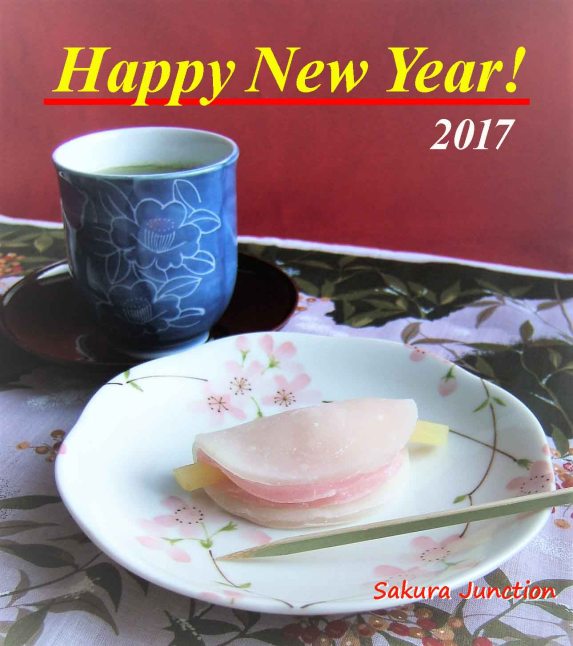
Happy New Year to you all again!  Hope you had great Christmas and New Year’s Day. The first sweet I would like to introduce you in 2017 is this sweet called ‘Hanabira Mochi‘.

Petal Mochi (Hanabira Mochi)

petal-mochi-top-croped2

Hanabira‘ means flower petal in Japanese so I shall call this sweet Petal Mochi.

It is a sweet we traditionaly have only during New Year period. It started in the palace to celebrate a New Year by eating two layers of white and red mochi with some other food. Until the Meiji period the custom spread out to people in the country and the food got simplified onto some similar type of sweet that I made here.

Continue reading