A Leaf on a Puddle on One Rainy Day

A Leaf on a Puddle Centre 2

The weather has been a little crazy in England. We had a short heat wave about three weeks ago and then it became very cold for a week. It suddenly became much hotter again and the temperature jumped up about 10 degree. Then again it became rainy for the last few days. It was thundering with heavy rain the other day but now at this moment …

‘Tsuyu (Rainy Season)’ is coming

The weather in Japan seems also a little strange this year. In some northern part it snowed right after the temperature was 30℃. However, it is June now and the one thing we are sure is that the ‘Tsuyu‘ is coming to Japan soon most definitely. ‘Tsuyu‘ is the Rainy season written as ‘梅雨‘ in Japanese. The first character ‘‘ means Plum and the second one ‘‘ is Rain. So why could ‘Plum-Rain’ mean Rainy Season?

There are several theories regarding the word. [Theory 1] It is because it’s the season Plum fruits ripen. [Theory 2] The word ‘Baiu (黴雨)’ came from China meaning as Rainy Season a long time ago. The first character ‘黴’ means ‘Mould’. Because in high humidity things gets mouldy easily so then it was actually ‘Mouldy Season’. However, people in Japan did not like the sound of Mouldy Season so changed the character ‘黴’ to ‘梅’ which has the same sound ‘Bai’. Now the Rainy Season is written as ‘梅雨’ and read either ‘Baiu’ or ‘Tsuyu’.

A Leaf on a Puddle

I wanted to make a Japanese sweet in the theme of Rainy Season. I tried several ideas and then a Puddle image popped into my mind.
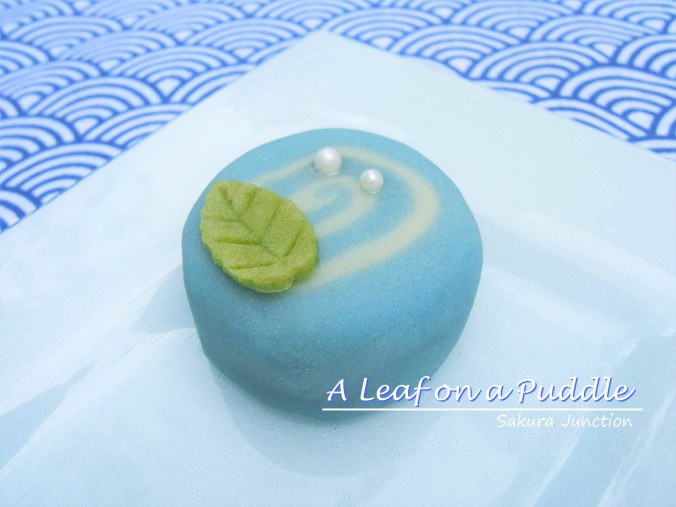
A Leaf on a puddle single 2

This sweet is created from an image of a puddle with a leaf floating on its surface. Rain has been stopping for a while but some droplets have just started falling onto the puddle to make a swirl and some bubbles.

Continue reading

Shobu (菖蒲) / Iris

Shobu front

Koinobori‘ on my previous post is the traditional decoration on the ‘Kodomo-no-Hi‘ (Children’s Day/Boy’s Day) on the 5th of May in Japan. Another tradition on the day is that we decorate out house with ‘Shobu (Iris)’. So what is the reason behind this custom?

‘Shobu (菖蒲)’ on ‘Kodomo-no-Hi’

1280px-140614_Yagyu_Iris_Garden_Nara_Japan02bs5

Hana-shobu (ja.wikipedia.org)

First of all there are two types of ‘Shobu‘. One of them is ‘Hana-Shobu‘. It is Iris which we enjoy the magnificent flower with a striking colour and shape. The other one is medicinal ‘Shobu’ with very scented leaves but with insignificant flowers. They are totally different plants.

It seems like that people started using Shobu for this ceremonial occasion because …

Continue reading

Kodomo-no-Hi / Koinobori

Koinobori

‘Koinobori’ sweet

Time passes fast. Very fast indeed! It’s already May. This week people in Japan are having the longest National Holiday break in a year called the Golden Week. One of the Bank Holidays during the Golden Week is the 5th of May, ‘Kodomo-no-Hi‘. It is a day to celebrate the growth & health of children, but it is more like the Boy’s Day. We have the Girl’s Day on the 3rd of March as I posted before.

‘Kodomo-no-Hi’

There are several things people do on the Kodomo-no-Hi. The most famous thing is that we place fish shaped flags outside called ‘Koinobori‘ (‘Koi’ means carp and ‘Nobori’ is a kind of Flag). We have a song about it for children.

🎶 Yane yori takai Koinobori 🎶

It means “Koinobori swimming higher than the roof …”

%E3%81%93%E3%81%84%E3%81%AE%E3%81%BB%E3%82%99%E3%82%8A

Koinobori swimming high in the blue sky

Yes, it is placed traditionally higher than a roof, and some of them are bigger than a house. However, because many people live in a small apartment these days the size of Koinobori became much smaller in the last 50 years. From a week or two earlier towards the 5th of May you can see Koinobori swimming in the blue sky. It is a magnificent sight with a bit of wind, as they look like swimming in the sky. (However, I just saw somebody’s comment on social media that there is no Koinobori seen around where he lives…)

Continue reading

Other Sweets in the Final!

I made various versions of sweets with a ‘Spring’ theme for Wasoukan Cafe. Some of them were good and some were a little experimental and challenging. There were two particular ones that went to the final selection but did not go through to the Cafe menu. I feel they deserve to be introduced here.

Yoshino (Cherry Tree Mountain), Ukishima

Cherry Tree Mountain 2

Continue reading

Sakura Junction’s Sweets in April at Wasoukan

As I mentioned in my previous post I have started supplying Japanese sweets to a Kimono shop Wasoukan in London. Each month I am going to develop and make 2-3 different types of Japanese sweets for them according to the seasonal theme.

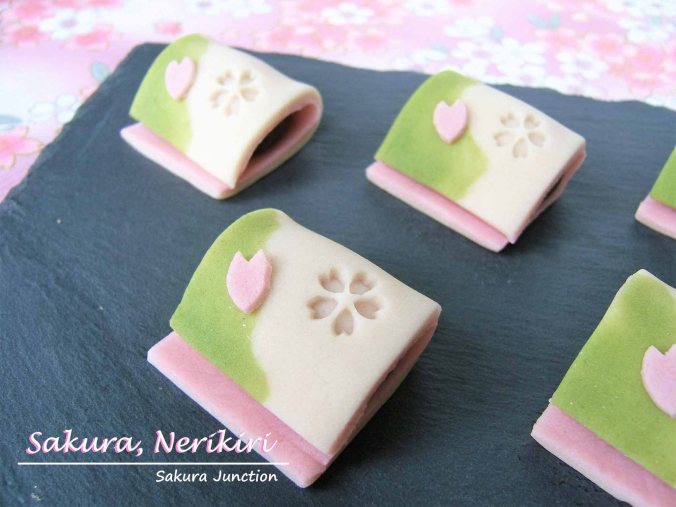
For April the theme was ‘Spring’. With this theme there was only one particular thing in my mind for the sweet and that was ‘Sakura (Cherry Blossom)’ of course. However, there were many ways to use Sakura design in sweets so that I created many different versions and decided on one design finally.

Sweets in Wasoukan

My sweets at Wasoukan Cafe

Sakura (Nerikiri)

Sakura sideB

Continue reading

Sakura Junction’s Sweet Served in a Special Space

This is an announcement, particularly to the people who live in London.

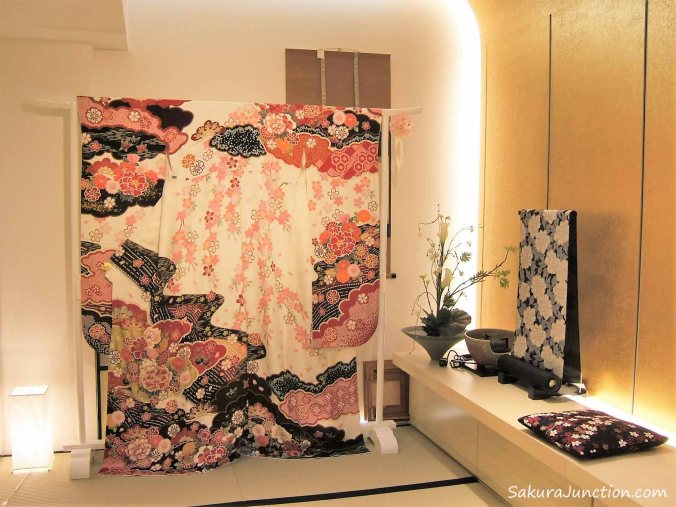
From this April you can enjoy Sakura Junction’s sweet served with tasty Japanese tea in a beautifully Japanese surrounding. This special venue is a Japanese Kimono shop Wasoukan which is located in the Notting Hill area just off Portobello Road. It is a continuation of the Portobello Market that is very popular to many tourists especially on Saturday.

Wasoukan front

The entrance of Wasoukan

Kimono Display

Beautiful Kimono display

Continue reading

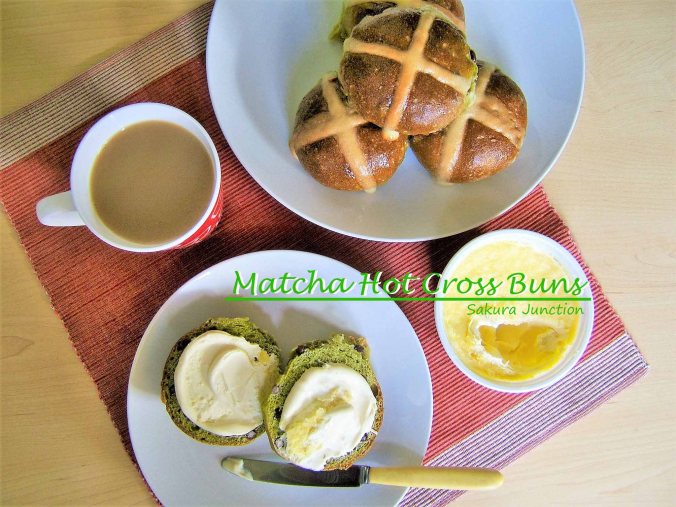
Matcha Hot Cross Buns

Matcha Hot Cross Buns with tea 2

I know the Easter has gone, but never mind.

I like making bread. My love in bread making started from making Hot Cross Buns several years ago. Since then I always make some Hot Cross Buns during Easter time. Although I said that I did not have enough time to make any special sweet for the Easter in my previous post I managed to make Hot Cross Buns. Without Hot Cross Buns Spring never comes to my kitchen.

In normal Hot Cross Buns I like to add several spices and orange zest. I love the smell when you toast it. However, this time I did it differently. I made “Matcha Hot Cross Buns”.

Matcha Hot Cross Buns

Matcha Hot Cross Buns on plate2

Continue reading

🎂 One Year Anniversary!

Happy B SJ

Today is a Special Day for Sakura Junction. It was this day, one year ago, I started this Blog. It is the one year anniversary! Hooray!

Although I wanted to write a Blog for such a long time, I could not start until last year. I wondered if there would be anybody that wanted to read my post or even if I could write something readable and carry on writing …

Now one year has passed and I appreciate that many people have stopped by my blog. I am so happy that you are very supportive to me, especially the people who take the time to leave nice comments.

Before starting the Blog there were many subjects I wanted to write about. I have written some of them but there are lots more I haven’t done yet. Maybe I am not a fast writer but hopefully I can cover all the things I want to write gradually.

Birthday Ukishima Cake with Strawberry An

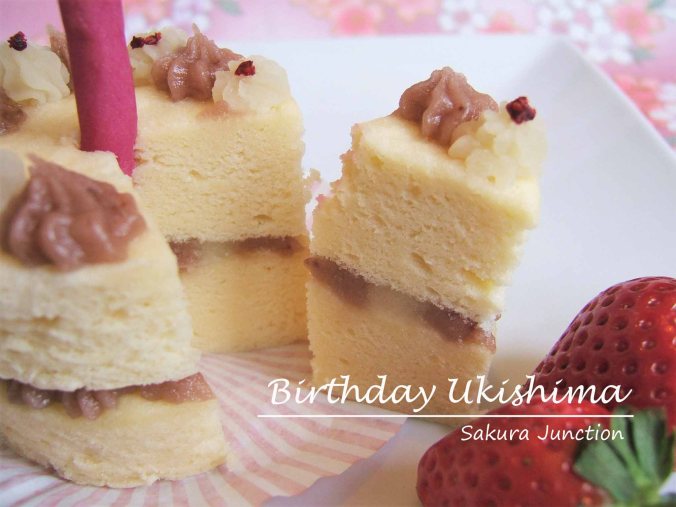
So, for my Blog’s one year anniversary I made a Birthday Cake. Oh, actually it is not a normal cake. It is a Japanese sweet ‘Ukishima‘ cake and decorated with ‘Strawberry-An‘. When I was thinking what I could make for this special occasion an idea popped into my head and I had to make it. The spongy base is plain ‘Ukishima‘ and cream part is ‘Shiro-An (white bean paste)’ mixed with Strawberry topped with dried Raspberry. And of course the candle is edible made of ‘Nerikiri’ Japanese sweet. The whole thing is free from Gluten and Dairy.

Birthday Ukishima cut

It might look big, but it is quite small. You can compare the size with the fresh strawberry.

I am happy that I can celebrate the first year. I hope I can do that for the following years to come.

Birthday Ukishima

Thank you very much for reading my Blog, my lovely readers!   😀

Hishi-Mochi Ukishima on Hinamatsuri

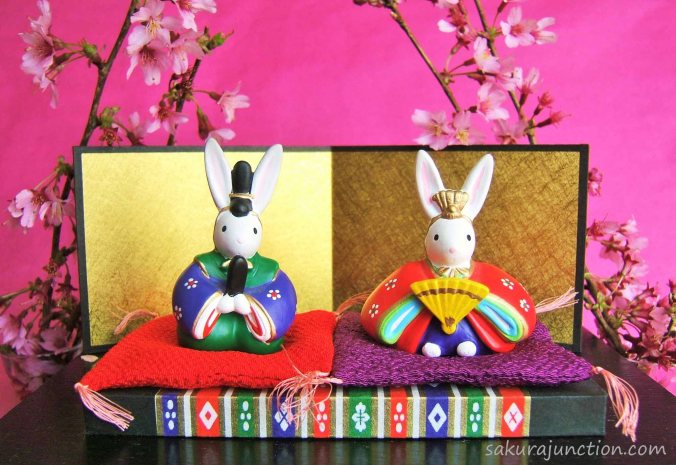
Usa hina

My little Rabbit Hina-ningyou

The 3rd of March is Girls’ Day in Japan. It is called ‘Hina Matsuri‘ or ‘Momo no Sekku‘ and we celebrate girls’ health and growth (Don’t worry we have Boys’ Day as well). This day we decorate ‘Hina Ningyou‘, the dolls of a princess and a prince or even with lots of their servants and music players on red carpeted shelved space, with Plum blossoms in a room.

My Hina Ningyou are Rabbits. I brought them when I came to England. They are very small and cute.

There is certain food we eat on the day that is all pretty and beautiful for girls of course. Main meal is definitely ‘Chirashi-zushi‘ which is Sushi rice served with colourful fish, vegetable and egg on top. We also have a clear soup with ‘Hamaguri‘ Big Clam.

One of the typical sweets for this day is ‘Hishi-mochi‘ which is Rice cake in a diamond shape in tricolours of pink, white and green). ‘Hina arare‘ (pastel coloured Rice crackers) and lots of sweets in flower shape & colours are often had as well. The girls have a drink called ‘Amazake‘ which is sweet Sake. Yes, it is a kind of Sake. Although there is alcoholic Amazake but normally we have sweet sake without alcohol, so young girls can have it on this Hinamatsuri.

I have been thinking what I should make for this day and wanted to try something new for me. And then one idea stuck in my mind so … here it is.

Hishi-Mochi Ukishima 

Hishi-mochi ukishima SJ Continue reading

Mochi / Shiratama Dango (白玉だんご)

You might know one of the famous very Japanese food ‘Mochi (Rice Cake)‘. We traditionally eat it during New Year’s days (we celebrate for 3 days). ‘Mochi’ is made from sweet glutinous Rice by soaking, steaming & pounding it.

Mochitsuki

Traditional ‘Mochi-Tsuki’ (Rice cake pounding)

It has become very rare to see the traditional ‘Mochi-tsuki‘ (Rice cake pounding) these days. It’s only seen in some kind of festival. Instead we have an electric Mochi maker for home use and people can make Mochi easily, however, it is still fiddly to go through the process for making small amount of sweets at home.

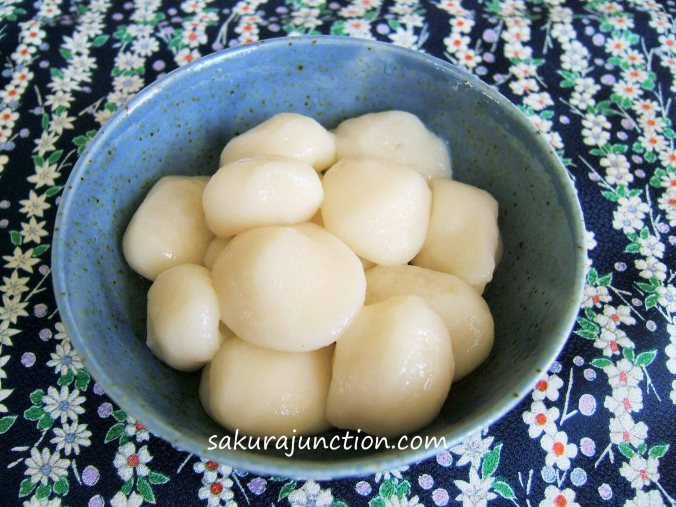
But there is another type of ‘Mochi’. It’s so much easier to make particularly for a very small amount. It is ‘Shiratama- Dango’.

<Mochi / Shiratama Dango> 

Shiratama

Continue reading