Sho-Chiku-Bai γ€€

Have you heard about ‘Sho Chiku Bai‘? You might think “Yes, it’s a ‘Sake’, isn’t it?. That is correct, but there is an origin that the company named their sake with that name. ‘Sho-Chiku-Bai‘ means ‘Pine Tree – Bamboo – Plum Blossom’ in Japanese in this order. They are the three objects Japanese think very auspicious so that we use an image of these three a lot for happy occasion such as a wedding and during New Year period.

I wanted to make some kind of sweet based on ‘Sho-Chiku-Bai’ and came up to this idea.

Sho – Chiku –Β  Bai

sho-chiku-bai-two-top

It is made of a type of Japanese Sweet called ‘Nerikiri‘ and not marzipan which you might think it looks like.

sho-chiku-bai-two-front

The main ingredients are Beans, Sugar and Rice Flour. It is very simple but through a lot of complicated process.

Continue reading

Petal Mochi (Hanabira Mochi)

Happy New Year to you all again!Β  Hope you had great Christmas and New Year’s Day. The first sweet I would like to introduce you in 2017 is this sweet called ‘Hanabira Mochi‘.

Petal Mochi (Hanabira Mochi)

petal-mochi-top-croped2

Hanabira‘ means flower petal in Japanese so I shall call this sweet Petal Mochi.

It is a sweet we traditionaly have only during New Year period. It started in the palace to celebrate a New Year by eating two layers of white and red mochi with some other food. Until the Meiji period the custom spread out to people in the country and the food got simplified onto some similar type of sweet that I made here.

Continue reading

Sweet ‘Mochi Snowman’ β›„

This year we are having very mild winter in England. We hardly need to heat rooms during daytime and wear gloves outside. So it is very unlikely that we are going to have a White Christmas. Although it is not cold, in my mind “Winter = Snow” so another sweet I made in the Winter theme was this one.

Mochi Snowman

snowman-hiding

It is made of ‘Mochi‘ Rice Cake type of sweet.

Continue reading

Christmas WA-Pudding

What kind of traditional Food do you have during the Christmas season? In England people have Roast Turkey with Gravy for their meal and then Mince Pie or Christmas Pudding for dessert or Tea.

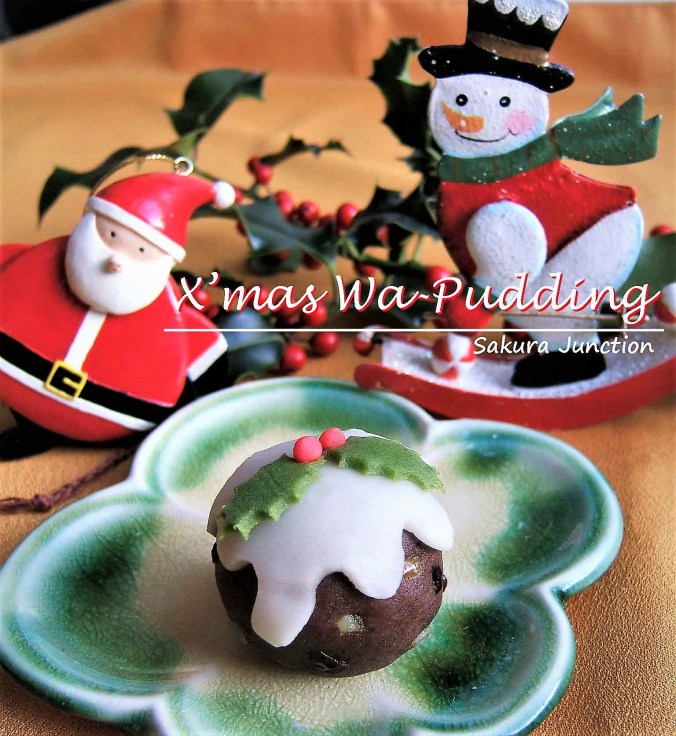
I wanted to make some Japanese Sweet with a Christmas theme so after thinking for a few days decided to make this fusion sweet.

Christmas WA-Pudding

wa-pudding-xmas2


It might look like just a normal Christmas Pudding which is a wheat cake with lots of dried fruits and steamed in a quite big bowl. My version is much much smaller, just about 5cm in diameter. It is actually a very traditional Japanese sweet ‘Nerikiri‘ that is made from sweet Bean paste, rice flour and sugar. The white part is also made from sweet White Bean Paste and not icing sugar.

Continue reading

Japanese Maple in Autumn Colour

Day by day Autumn is setting in here in London. First thing which comes to my mind by thinking about Autumn is colour change in Leaves. It would defines as Autumn Colours so it should be the most significant part of this season. In Japan we have four completely different seasons. Warm & beautiful Spring with lots of Cherry blossom, very hot & humid Summer, very cold Winter with deep snow in some area and then … this Autumn. Our Autumn is very between summer and winter, but it is not just that. During the transition period between two totally different seasons a significant temperature change causes the beautiful Autumn Colour in leaves. The Nature is Science. It is amazing!

Japan is a very mountainous country and the sight of mountains in Autumn colour is so magnificent. It does not get defeated by the sight of marvellous view of Sakura, Cherry blossom in spring. We even have a word ‘Momiji-gari‘. ‘Momiji‘ is a Japanese word for Japanese Maple and ‘Gari/Kari‘ means Hunting. Well, we do not hunt/harvest Maple leaves literally but it means that we go out to the countryside to enjoy the amazing view of mountains which are covered in various colours in yellow to red.

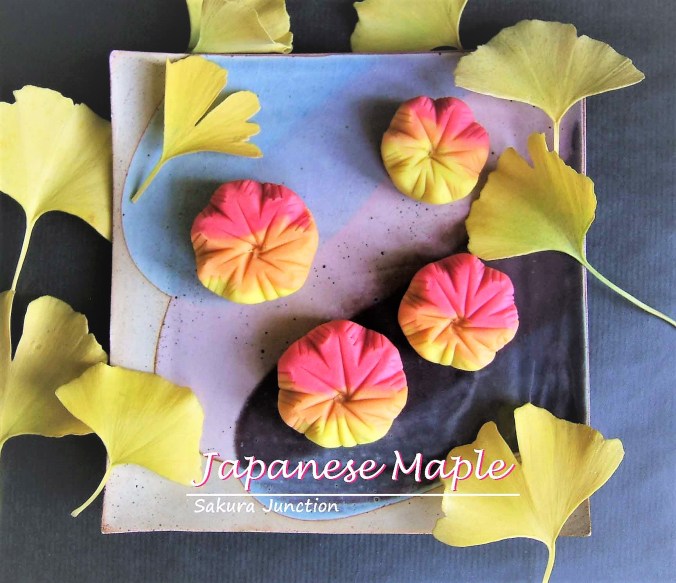
The most famous plant with the leaves in Autumn colour is ‘Momiji‘, Japanese Maple (Acer palmatum). I thought it represents beautiful Autumn the most so I made my version of it as a sweet.

Japanese Maple, Momiji

japanese-maple-all3

Yes, we call the plant ‘Momiji‘ not ‘Emoji‘. Please don’t be confused.Β  πŸ˜€

Continue reading

Mochi Sweet Chestnut – The Taste of Autumn

Officially it is Autumn now. In the UK the clock has been set back to Winter Time so that morning starts in darkness and the Sun sets very early. The weather has been becoming more and more wet and miserable. On the contrary in Japan Autumn is described as for 1. Sport, 2. Appetite, 3. Arts, 4. Reading Books and then 5. Great Autumn Colour and more!

The reason that “Autumn is for Appetite” is simply because there are so many tasty food that become available during this season. They are Mushrooms (including super Mushroom ‘Matsutake‘), Fruits (such as ‘Kaki’ Persimmon), Sweet Potatoes, Ginkgo Nuts and so on …

However, the delicacy we enjoy the most of all is ‘Kuri’ – Sweet Chestnut. Everybody loves Sweet Chestnut in Japan. I have to say that it is almost like “Kuri = Autumn” for Japanese. We make lots of sweet with Kuri Chestnut and we cook even rice with it.

So inevitably I chose Sweet Chestnut as the material for the sweet of November.

Kuri – Mochi Sweet Chestnut

mochi-chestnut-in-autumn-colour

Continue reading

Halloween ‘Mochi Ghost’ πŸ‘»

It is getting colder now in the UK. However, before Winter is coming ‘Halloween is coming!’ I attempted making Japanese sweet last year in the Halloween theme. It was … OK but I was not satisfied. So this year I tried harder and these are the result.

Mochi Ghost

I made two types of sweets for Halloween this year. First one is this Mochi Ghost πŸ‘».

mochi-ghost-gathered

Continue reading