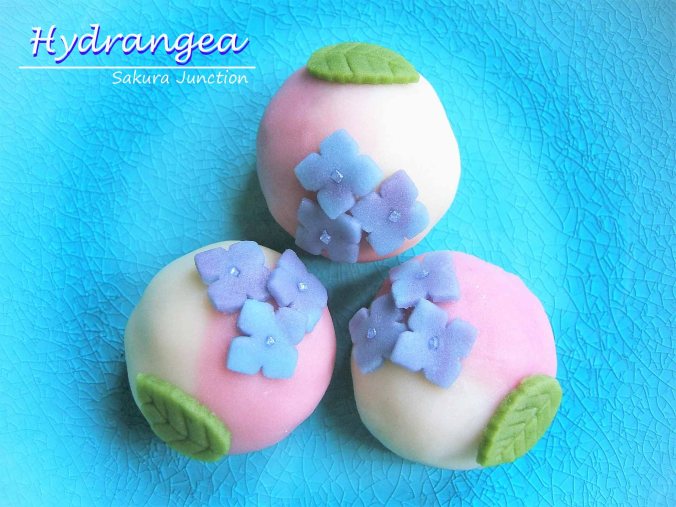
Ajisai / Hydrangea

Ajisai gathered 2

It rains a lot here in London these days and it is ‘Tsuyu 梅雨’ the Rainy season in Japan now too. Japanese like associating things with each season and we have a special name ‘Kigo 季語’ for those words that describe seasons in songs and poems like ‘Haiku‘. For instance they can be from weather (Snow), astronomy (Full Moon), event (Rice planting, ‘Hanami‘ Cherry Blossom viewing) or food (Clam, Wasbi). Of course plants and flowers are very seasonal and they are also Kigo.

So what kind of thing can be Kigo for this ‘Tsuyu‘ Rainy Season? There are several things that reminds me of Rainy days and one of the things I am very certain that most Japanese people would associate with must be ‘Ajisai / Hydrangea’ and a Snail. The plant grows and glorifies the flower during the Rainy season and the colour of the flower (OK, I know it is actually calyx and not petal) intensifies in rain and deepens. Strangely there is always a snail or two on a leaf. Ajisai and a Snail are inseparable in Japan.

Ajisai/ Hydrangea

During Tsuyu season it rains day in, day out, but you cannot just live in a life dark and dull. You need to brighten up your feeling as Hydrangea is getting more and more beautiful in rainy days.

Ajisai front - trimed

I tried creating several sweets in a theme of ‘Tsuyu’ for this month. ‘A leaf on a Puddle’ in my previous post was one of them and this ‘Ajisai/ Hydrangea’ was another.

Continue reading

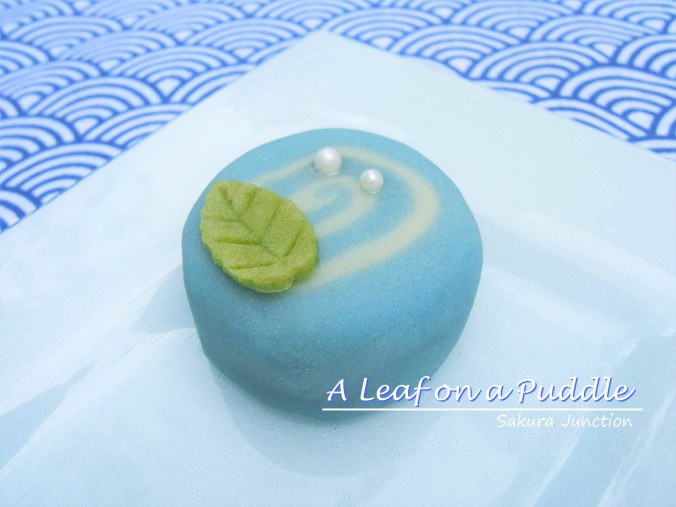
A Leaf on a Puddle on One Rainy Day

A Leaf on a Puddle Centre 2

The weather has been a little crazy in England. We had a short heat wave about three weeks ago and then it became very cold for a week. It suddenly became much hotter again and the temperature jumped up about 10 degree. Then again it became rainy for the last few days. It was thundering with heavy rain the other day but now at this moment …

‘Tsuyu (Rainy Season)’ is coming

The weather in Japan seems also a little strange this year. In some northern part it snowed right after the temperature was 30℃. However, it is June now and the one thing we are sure is that the ‘Tsuyu‘ is coming to Japan soon most definitely. ‘Tsuyu‘ is the Rainy season written as ‘梅雨‘ in Japanese. The first character ‘‘ means Plum and the second one ‘‘ is Rain. So why could ‘Plum-Rain’ mean Rainy Season?

There are several theories regarding the word. [Theory 1] It is because it’s the season Plum fruits ripen. [Theory 2] The word ‘Baiu (黴雨)’ came from China meaning as Rainy Season a long time ago. The first character ‘黴’ means ‘Mould’. Because in high humidity things gets mouldy easily so then it was actually ‘Mouldy Season’. However, people in Japan did not like the sound of Mouldy Season so changed the character ‘黴’ to ‘梅’ which has the same sound ‘Bai’. Now the Rainy Season is written as ‘梅雨’ and read either ‘Baiu’ or ‘Tsuyu’.

A Leaf on a Puddle

I wanted to make a Japanese sweet in the theme of Rainy Season. I tried several ideas and then a Puddle image popped into my mind.

A Leaf on a puddle single 2

This sweet is created from an image of a puddle with a leaf floating on its surface. Rain has been stopping for a while but some droplets have just started falling onto the puddle to make a swirl and some bubbles.

Continue reading

Visiting RHS Chelsea Flower Show 2016

Chelsea Mathematics

It was ‘RHS Chelsea Flower Show’ week last week. It is the biggest Flower show on earth and people from all over the world exhibit their design and display. I am not a member of RHS (Royal Horticultural Society) but love to go there whenever it is available. Although I was not expecting that would happen to me this year, I got a ticket accidentally so I went to view beautiful gardens.

Chelsea Shop BMy Chelsea viewing starts as soon as I come out from the tube station. The nearest station to the show is Sloan Square which leads to King’s Road with lots of clothes shops. During the Flower Show period many shops around there use flowers as a part of their window display. I always wander around there before walking towards the show.

Chelsea shop A

Continue reading

Now, I am a 🍶Sake Sommelier!

Last year I entered to a Sake recipe competition for which I had to create two Non-Japanese food recipes, one savoury and the other a dessert. To my surprise I went through to the final that was held in London in January. More surprisingly I won second place among 6 finalists. I have posted about this event and what happened to me on that day.

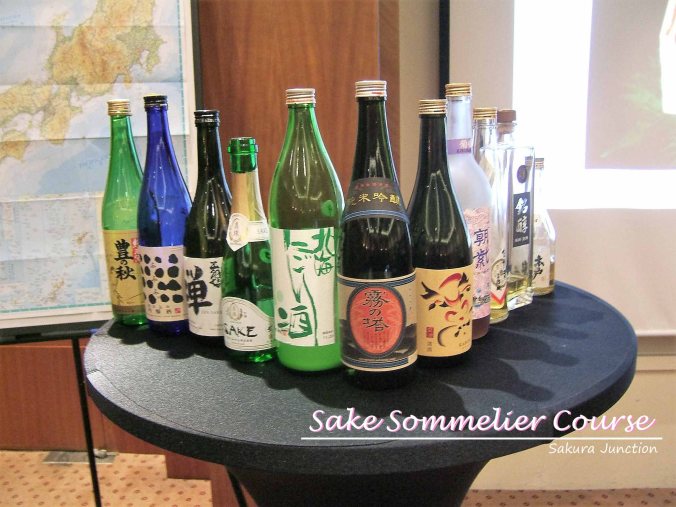
At the end of that event I was given some vouchers. That was great but that was not the main prize. The prize for the second place was “Two Days Certified Sake Sommelier Course” by the Sake Sommelier Academy. Although there are more and more people interested in Japanese alcohol ‘Sake’, the course runs only 2-3 times a year. So I had to wait to attend the course until the next one would be held in London and that was last week. So finally my waiting was over!

Two Days “Certified Sake Sommelier” Course

Sake selection.jpg

Selection of Sake

Continue reading

Shobu (菖蒲) / Iris

Shobu front

Koinobori‘ on my previous post is the traditional decoration on the ‘Kodomo-no-Hi‘ (Children’s Day/Boy’s Day) on the 5th of May in Japan. Another tradition on the day is that we decorate out house with ‘Shobu (Iris)’. So what is the reason behind this custom?

‘Shobu (菖蒲)’ on ‘Kodomo-no-Hi’

1280px-140614_Yagyu_Iris_Garden_Nara_Japan02bs5

Hana-shobu (ja.wikipedia.org)

First of all there are two types of ‘Shobu‘. One of them is ‘Hana-Shobu‘. It is Iris which we enjoy the magnificent flower with a striking colour and shape. The other one is medicinal ‘Shobu’ with very scented leaves but with insignificant flowers. They are totally different plants.

It seems like that people started using Shobu for this ceremonial occasion because …

Continue reading

Kodomo-no-Hi / Koinobori

Koinobori

‘Koinobori’ sweet

Time passes fast. Very fast indeed! It’s already May. This week people in Japan are having the longest National Holiday break in a year called the Golden Week. One of the Bank Holidays during the Golden Week is the 5th of May, ‘Kodomo-no-Hi‘. It is a day to celebrate the growth & health of children, but it is more like the Boy’s Day. We have the Girl’s Day on the 3rd of March as I posted before.

‘Kodomo-no-Hi’

There are several things people do on the Kodomo-no-Hi. The most famous thing is that we place fish shaped flags outside called ‘Koinobori‘ (‘Koi’ means carp and ‘Nobori’ is a kind of Flag). We have a song about it for children.

🎶 Yane yori takai Koinobori 🎶

It means “Koinobori swimming higher than the roof …”

%E3%81%93%E3%81%84%E3%81%AE%E3%81%BB%E3%82%99%E3%82%8A

Koinobori swimming high in the blue sky

Yes, it is placed traditionally higher than a roof, and some of them are bigger than a house. However, because many people live in a small apartment these days the size of Koinobori became much smaller in the last 50 years. From a week or two earlier towards the 5th of May you can see Koinobori swimming in the blue sky. It is a magnificent sight with a bit of wind, as they look like swimming in the sky. (However, I just saw somebody’s comment on social media that there is no Koinobori seen around where he lives…)

Continue reading

Other Sweets in the Final!

I made various versions of sweets with a ‘Spring’ theme for Wasoukan Cafe. Some of them were good and some were a little experimental and challenging. There were two particular ones that went to the final selection but did not go through to the Cafe menu. I feel they deserve to be introduced here.

Yoshino (Cherry Tree Mountain), Ukishima

Cherry Tree Mountain 2

Continue reading

Sakura Junction’s Sweets in April at Wasoukan

As I mentioned in my previous post I have started supplying Japanese sweets to a Kimono shop Wasoukan in London. Each month I am going to develop and make 2-3 different types of Japanese sweets for them according to the seasonal theme.

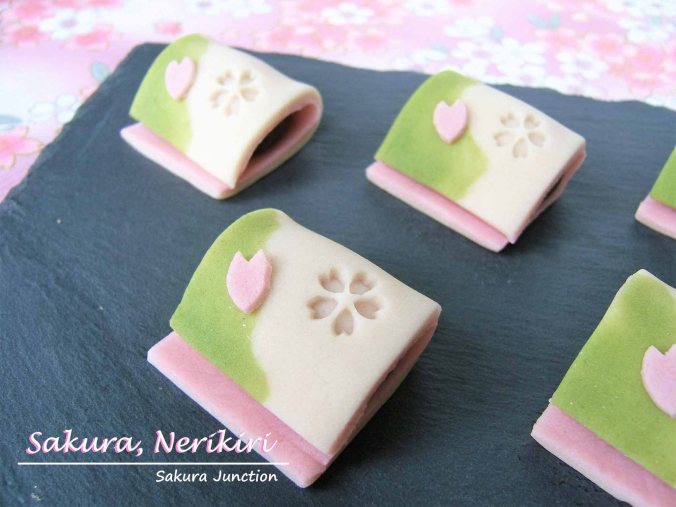
For April the theme was ‘Spring’. With this theme there was only one particular thing in my mind for the sweet and that was ‘Sakura (Cherry Blossom)’ of course. However, there were many ways to use Sakura design in sweets so that I created many different versions and decided on one design finally.

Sweets in Wasoukan

My sweets at Wasoukan Cafe

Sakura (Nerikiri)

Sakura sideB

Continue reading

Sakura Junction’s Sweet Served in a Special Space

This is an announcement, particularly to the people who live in London.

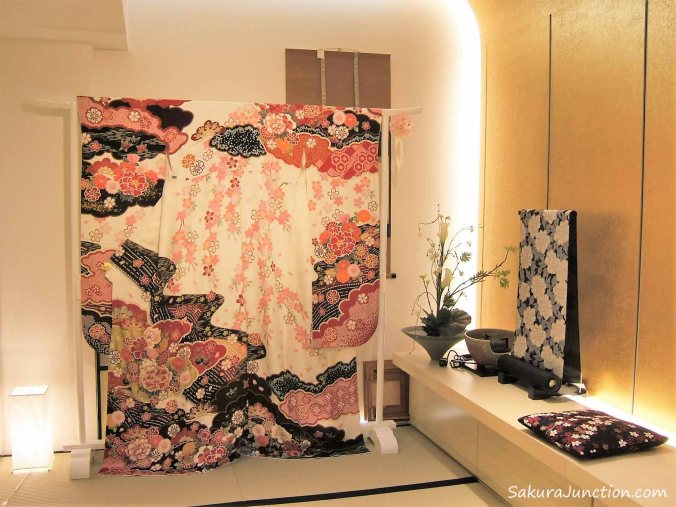
From this April you can enjoy Sakura Junction’s sweet served with tasty Japanese tea in a beautifully Japanese surrounding. This special venue is a Japanese Kimono shop Wasoukan which is located in the Notting Hill area just off Portobello Road. It is a continuation of the Portobello Market that is very popular to many tourists especially on Saturday.

Wasoukan front

The entrance of Wasoukan

Kimono Display

Beautiful Kimono display

Continue reading